
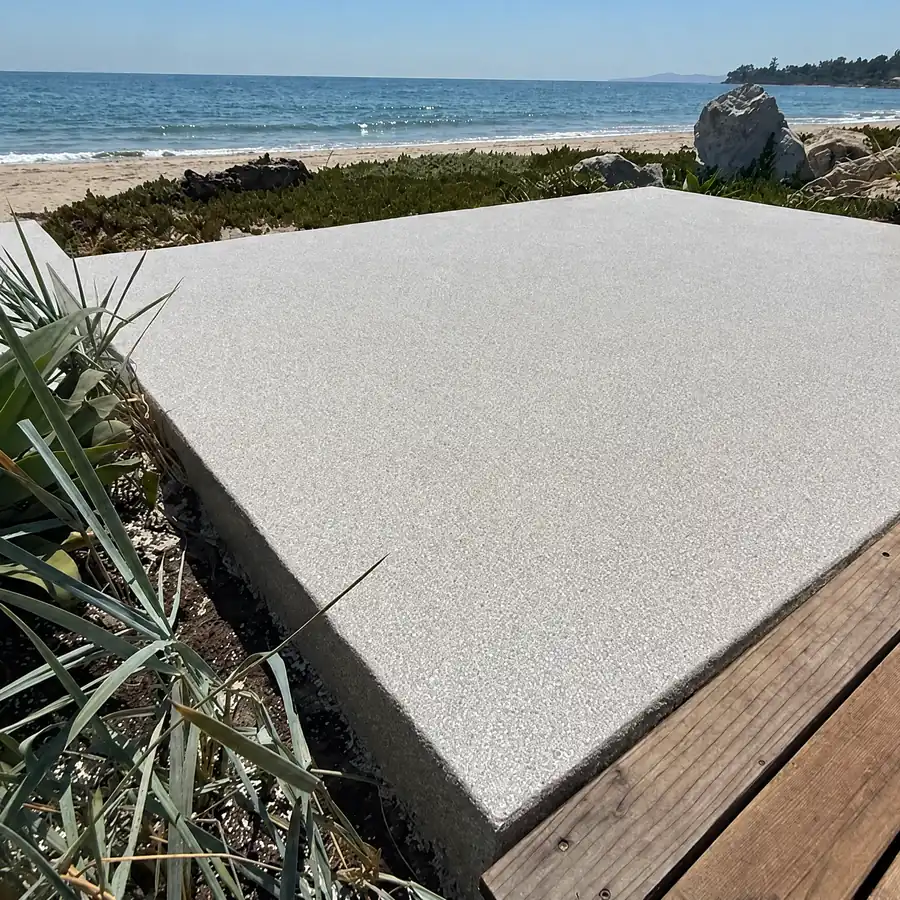
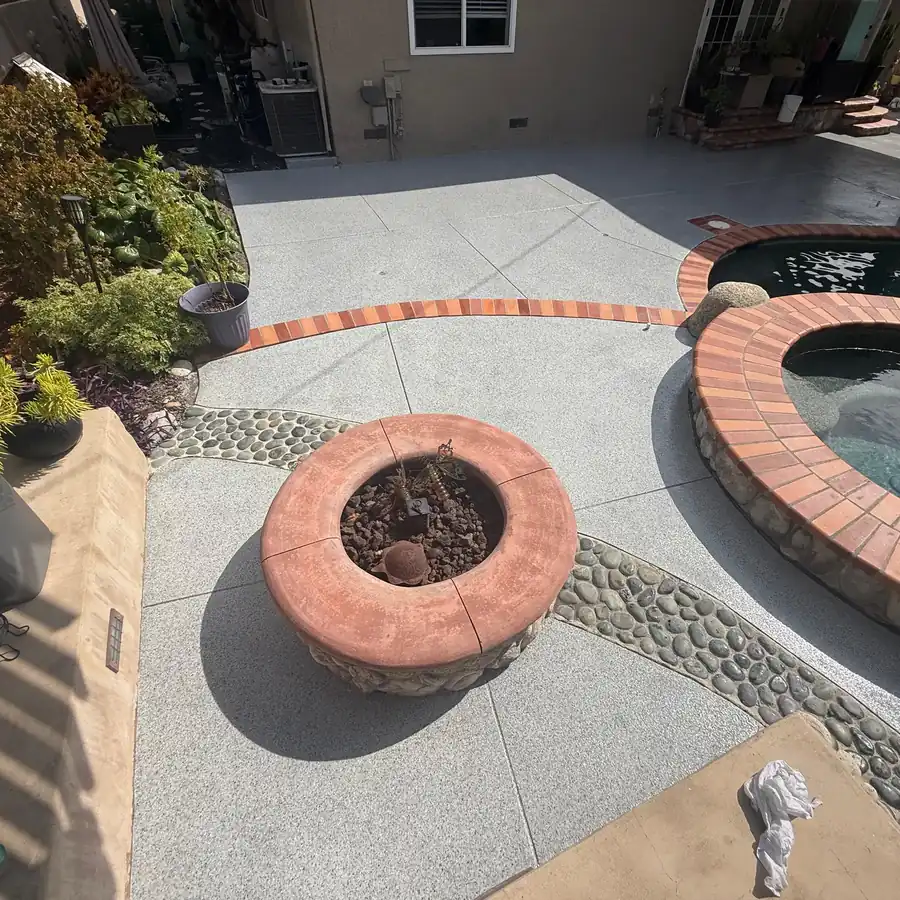
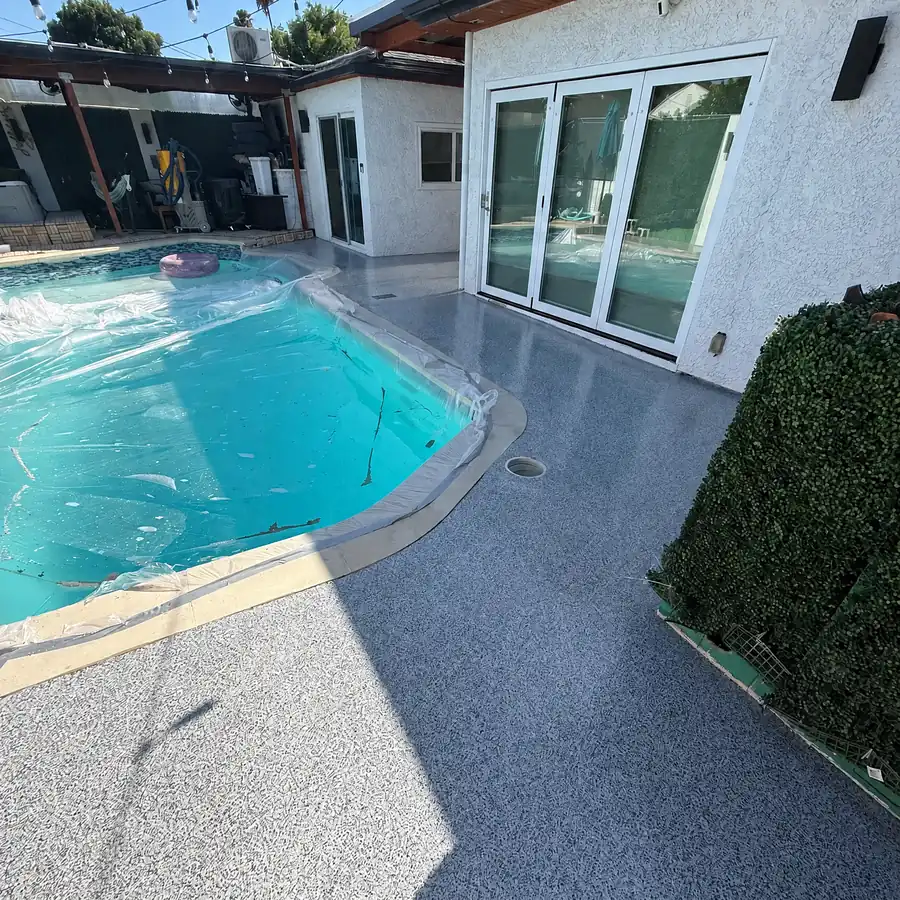
Polyaspartic Floor Coatings in Santa Monica, CA
Patios, driveways, pool decks and sunny garages get a clear, color-stable polyaspartic finish, installed in one to two days.
Limited lifetime adhesion warranty · Free on-site estimates · Shop at 1653 Stanford St #1, Santa Monica
Free On-Site Estimate
How much does a polyaspartic patio or pool deck coating cost in Santa Monica?
Polyaspartic coatings for patios, driveways and pool decks in Santa Monica cost $8-$12 per sq ft, or $3,200-$4,800 for an area of up to 400 sq ft. Most outdoor jobs take 1-2 days, and the topcoat is UV-stable, so it holds its color in direct sun where standard epoxy can amber.
Polyaspartic is also the clear finish on many of our flake and metallic garage floors, so it shows up indoors too. This page starts outside, where sun is the main test. The epoxy vs polyaspartic guide gives the head-to-head, and the color chart shows the colors we install.
What direct sun does to a floor coating, and how polyaspartic answers it
Sun is the first test any outdoor slab faces. Standard epoxy is excellent underfoot but turns amber over time in direct light, which is harmless in a basement and a problem on a patio. Polyaspartic is a UV-stable chemistry: it stays clear and holds the color you chose, so it is the system we use on anything that sees daily sun, including garages with the door open through the afternoon.
Santa Monica weather is mild. Average highs run between 62 and 71 degrees F through the year, and the city gets about 13 inches of rain, mostly in January and February, based on 1991-2020 normals compiled by U.S. Climate Data. Mild is not the same as easy for coatings. Coastal mornings can be damp and overcast, especially in late spring, and coating makers publish temperature and dew point limits for application, so we plan start times around the day's conditions rather than the calendar.
We do not claim that salt air eats coatings or that every slab near the beach is wet, because neither is a claim we can document for this city. We test the slab we are standing on, and the maker's limits for moisture and temperature decide the build.
Polyaspartic work in Santa Monica and nearby
Tap a photo to enlarge it and check how the finish handles light, edges and texture.
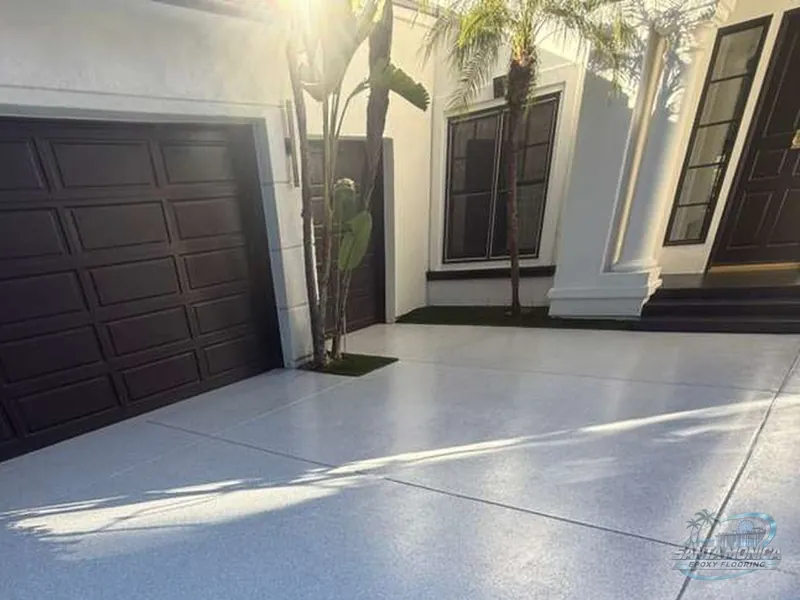
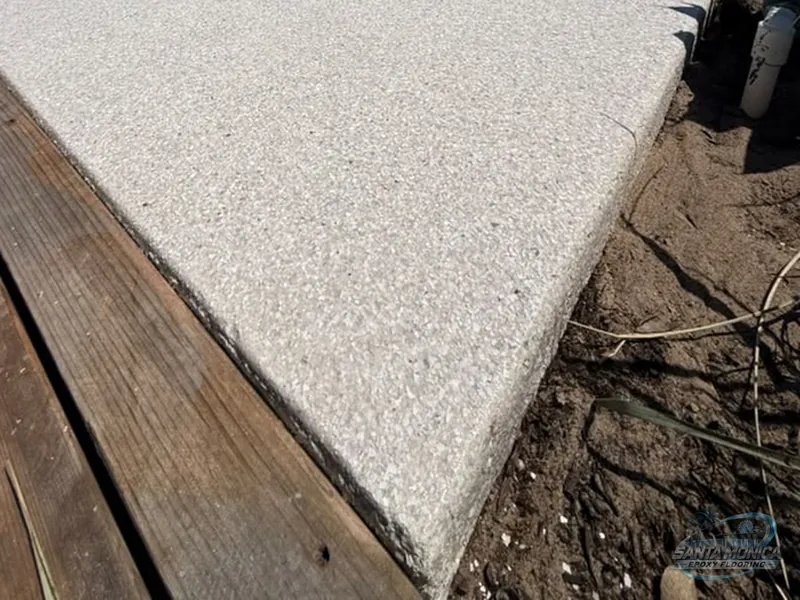
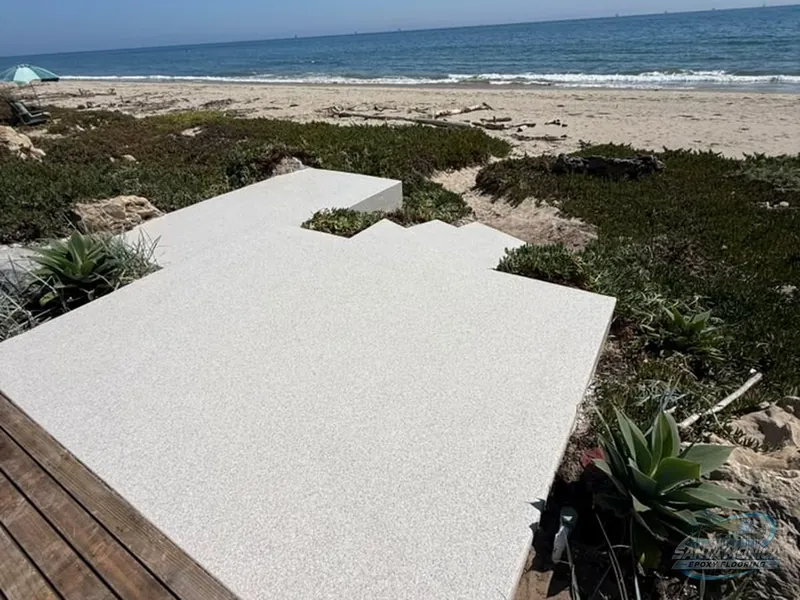
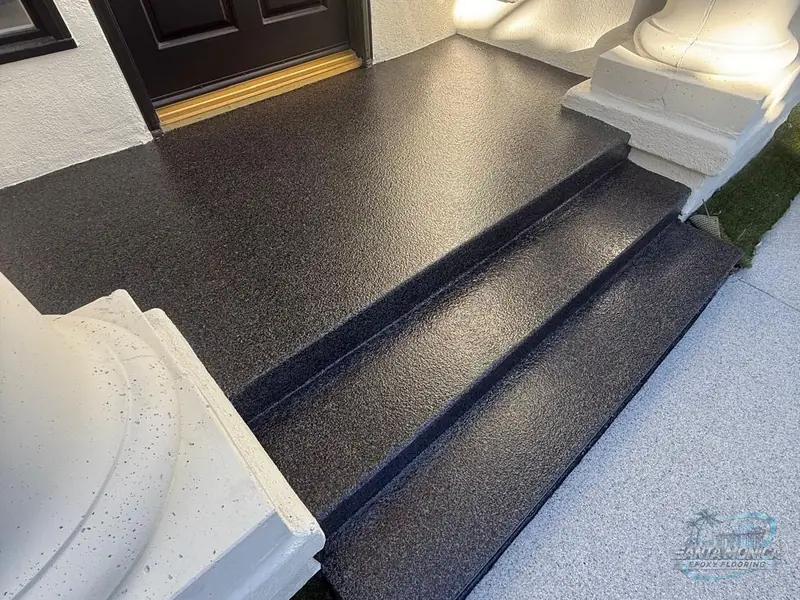
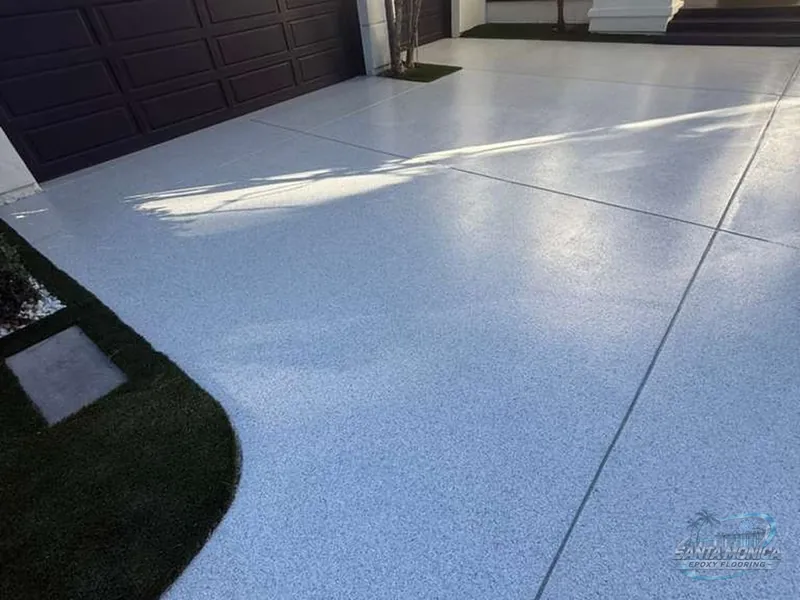
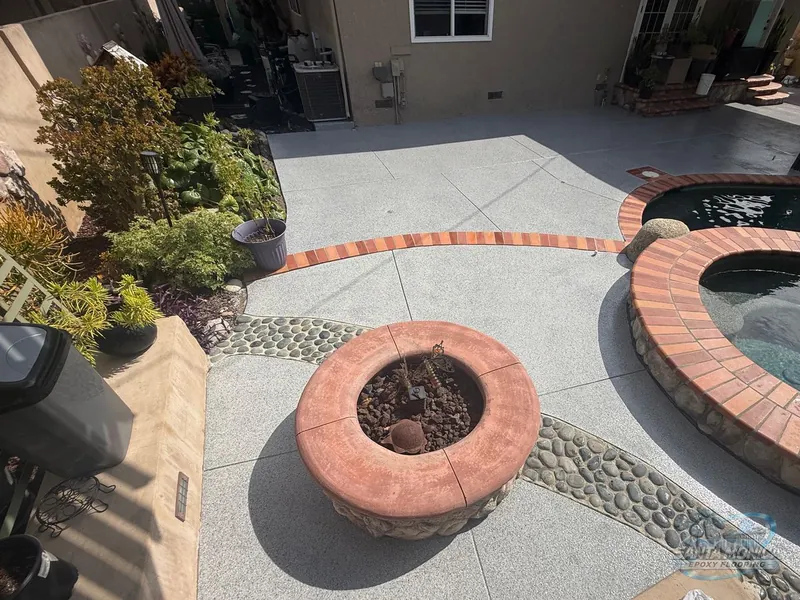
Patio, driveway and pool deck: one coating family, three priorities
A patio coating, the job people search for as patio epoxy coating, turns a stained or chalky slab into one continuous, sealed surface that sweeps clean. It suits homes where the patio works as an outdoor room and the concrete has been left bare, painted or sealed with something that has worn out.
A driveway coating takes tire traffic and sun together. The polyaspartic topcoat is built to resist hot-tire pickup, the soft spots and lifted patches that appear when a warm tire sits on a weak coating. Vehicle fluids and some high-performance tires can still stain any floor, so spills should be wiped up promptly.
A pool deck coating, the job often called pool deck resurfacing or pool deck restoration, has a different priority, and that priority is grip. Wet feet on a smooth finish are a hazard, so we add a grit additive to the topcoat. Lighter colors also absorb less heat, which counts on bare feet in July.
The same coatings are available across the Westside, from Brentwood to Pacific Palisades and Malibu.
Epoxy or polyaspartic: which is better, and where?
Both belong in a good floor system, just in different places.
| Point | Epoxy | Polyaspartic |
|---|---|---|
| Direct sun | Can amber over time | Stays clear and color-stable |
| Cure between coats | Slower | Faster, so outdoor jobs run 1-2 days |
| Typical role | Basecoat and interior floors | Topcoat, patios, driveways, pool decks |
| Hot-tire pickup | Depends on the topcoat above it | Built to resist it |
| Where we start | Moisture-barrier epoxy basecoat when the slab needs it | Pigmented polyaspartic basecoat when moisture is not the issue and UV matters |
How an outdoor polyaspartic coating job runs
Outdoor slabs follow their own steps, in a different order from the flake garage routine, and most jobs finish in one to two days on site.
- Site walk We look at the slab, drainage and edges, mark cracks and test for moisture before choosing a basecoat.
- Cleaning Grease, sealer and old paint are removed so nothing sits between the concrete and the new coating.
- Diamond grinding The surface is ground to a bonding profile with HEPA-vacuumed dust control and no acid etching.
- Crack and joint repair Cracks, pits and spalls are filled and leveled flush, because a thin film follows the surface it covers.
- Basecoat A pigmented polyaspartic basecoat or a moisture-barrier epoxy basecoat goes on, chosen by what the slab test says.
- Color or flake Decorative flake is broadcast into the wet basecoat when the design calls for it, and solid areas skip this step.
- Grit and topcoat A UV-stable polyaspartic topcoat is applied, with a grit additive mixed in wherever the surface will get wet.
- Cure and handoff The coating cures before use, then we walk the finished work with you and go over care.
Can you pressure wash a coated patio? Heat, grip and upkeep
Dark colors get hot in direct sun, and no coating changes that. If bare feet matter, choose a lighter tone for patios and decks. Grip works the opposite way: more grit means more traction and a slightly rougher feel, so we settle the balance with you before the topcoat goes on.
Upkeep is simple. Sweep, rinse and use a soft brush with a mild cleaner where needed, and keep any pressure washer on a wide fan tip held back from edges. Our cleaning guide covers the routine, and the lifespan guide explains what shortens a coating's life.
A coating is not a repair for a slab that is still moving. Cracks that keep widening need to be assessed before anything goes on top, and a quick look at why floors peel shows how skipped prep leads to failure. Weighing a weekend kit? The DIY kit vs professional comparison lays out the trade.
Outdoor polyaspartic and flake pricing in Santa Monica
Outdoor slabs cost $8-$12 per sq ft, and flake garage floors run $6.50-$10 per sq ft. The smallest job we take is $2,600, and anything beyond a sound, clean slab is priced after we see it.
| System | Per sq ft | Typical 2-car garage | Install time |
|---|---|---|---|
| Patio, driveway & pool deck coating | $8-$12 per sq ft | $3,200-$4,800 | 1-2 days |
| Flake epoxy | $6.50-$10 per sq ft | $2,600-$4,000 | 1 day |
Polyaspartic topcoats on garage, flake and metallic floors
Outdoors is not the only place polyaspartic earns its spot. The finish on a flake epoxy garage floor is a UV-stable polyaspartic topcoat, and a metallic epoxy floor that sees daylight gets the same protection.
A garage floor epoxy job with the door open gets hours of sun, and the topcoat keeps the floor from yellowing there. The basecoat is slab-driven: moisture-barrier epoxy when the slab needs moisture protection, and pigmented polyaspartic when moisture is not the issue and UV resistance matters, as with sun-exposed floors, indoor-outdoor spaces and light flake colors.
Outdoor slabs at shops and offices go through our commercial epoxy flooring page and are quoted after a free site visit.
What to expect from the free estimate and the warranty
Our limited lifetime adhesion warranty covers how well the coating stays bonded to the prepared slab. You receive the written terms with the estimate, and they exclude damage caused by impact, chemicals or concrete movement.
At the visit we look at drainage, edges and existing coatings, test for moisture and quote the job in writing. Compare that figure with the epoxy flooring cost page. Our shop on Stanford Street is open Monday to Thursday from 8 am to 5 pm and Friday from 8 am to 2 pm, and you can reach us at (310) 853-8972 or through the contact page.
Polyaspartic questions, answered
Does polyaspartic turn yellow in the sun?
No. Polyaspartic is UV-stable, so it stays clear and keeps its color in direct sunlight. Standard epoxy can amber over time under strong light, which is why anything outdoors, and any garage that gets hours of sun, is finished with a polyaspartic topcoat.
How much does a polyaspartic driveway coating cost in Santa Monica?
Outdoor coating work costs $8-$12 per sq ft, which is $3,200-$4,800 for an area of up to 400 sq ft. The final figure depends on slab condition and prep. Projects start at $2,600, and the quote follows a free on-site visit.
Is a polyaspartic coating waterproof?
It seals the surface, so rain and rinse water shed off and spills wipe up, but no coating makes a slab itself waterproof. Water moving up through a damp slab or through cracks and joints can still push on any coating, so we test for moisture, repair cracks and let the maker's limits choose the basecoat.
Is a coated pool deck slippery?
It does not have to be. We add a grit additive to the topcoat for wet areas, and you can choose how much traction you want. More grit grips better and feels rougher underfoot, so we agree on the balance before the topcoat is applied.
Will a coated patio get too hot to walk on?
Dark colors absorb more heat and get hot in direct sun, while light colors stay noticeably cooler. If you walk barefoot, pick a lighter tone for the patio or deck. We can lay samples on the slab at the estimate so you can feel the difference.
Is polyurea or epoxy better for a Santa Monica garage floor?
Polyaspartic, a fast-curing relative of polyurea, beats plain epoxy where sun and heat are the issue, while epoxy builds a strong basecoat indoors. Neither replaces the other. Many floors use both, with a basecoat chosen by the slab and a UV-stable polyaspartic topcoat over it.
Can you resurface or restore an old pool deck with polyaspartic?
Yes. A worn or stained pool deck is ground to bare concrete, cracks and spalls are repaired, and a polyaspartic coating with a grit additive becomes the new surface, at $8-$12 per sq ft. A deck that is still moving or heavily damaged needs an on-site assessment before we quote.
Can I pressure wash a polyaspartic patio or driveway?
Usually yes, once the coating has fully cured. Use a wide fan tip, keep the nozzle moving and stay back from edges and joints, then finish with a soft brush and mild cleaner where needed. Harsh solvents and close, high-pressure jets are what dull or lift a coating.
Can you coat a patio in winter or after rain?
We need a dry slab and conditions inside the coating maker's limits. Most of the city's rain falls in January and February, so we check the forecast, test the slab and move the date when conditions are wrong rather than force the job.
More ways to coat concrete
See solid color and residential floors, industrial quartz and sand finish systems, the project gallery and about the company, then check the places we serve and read more on the blog.