
Industrial Epoxy Flooring in Santa Monica, CA
Quartz and sand broadcast systems for warehouses, workshops, auto shops and commercial kitchens, with joints repaired and the build matched to the load.
Limited lifetime adhesion warranty · Free on-site estimates · Shop at 1653 Stanford St #1, Santa Monica
Free On-Site Estimate
How much does industrial epoxy flooring cost in Santa Monica?
Industrial epoxy flooring in Santa Monica is quoted after a free site visit, with quartz and sand finish broadcast systems running $9-$16.50 per sq ft as a reference and taking 2-3 days. Traffic, chemicals, joint repair and how much old coating must come off decide where your floor lands, so the visit comes first.
Industrial slabs arrive with history: oil, old line paint, failed sealers, spalled joints and years of wheel traffic. This page explains what a broadcast build is, how it differs from a decorative garage floor, and how we plan for forklifts, hot water, cleaners and downtime. Customer-facing spaces are covered on the commercial epoxy page, and the shop is on Stanford Street in Santa Monica.
Industrial floors by use: what each one demands
Rough guidance to frame the site visit. The slab, the loads and the chemicals set the final build.
| Use | Lean toward | Watch for |
|---|---|---|
| Warehouse aisles | Heavier broadcast build | Wheel loads and joint condition |
| Auto or machine shop | Quartz or sand finish | Oil, brake fluid, drips |
| Commercial kitchen | Quartz broadcast, cove base | Hot water and cleaners |
| Loading or wash area | Textured sand finish | Wet footing and drainage |
| Light fabrication | Solid color or quartz | Dropped tools and dust |
Lighter-duty rooms live on the residential epoxy page, and customer-facing floors on the commercial page.
What is epoxy flooring for industrial use? The quartz and sand finish broadcast method
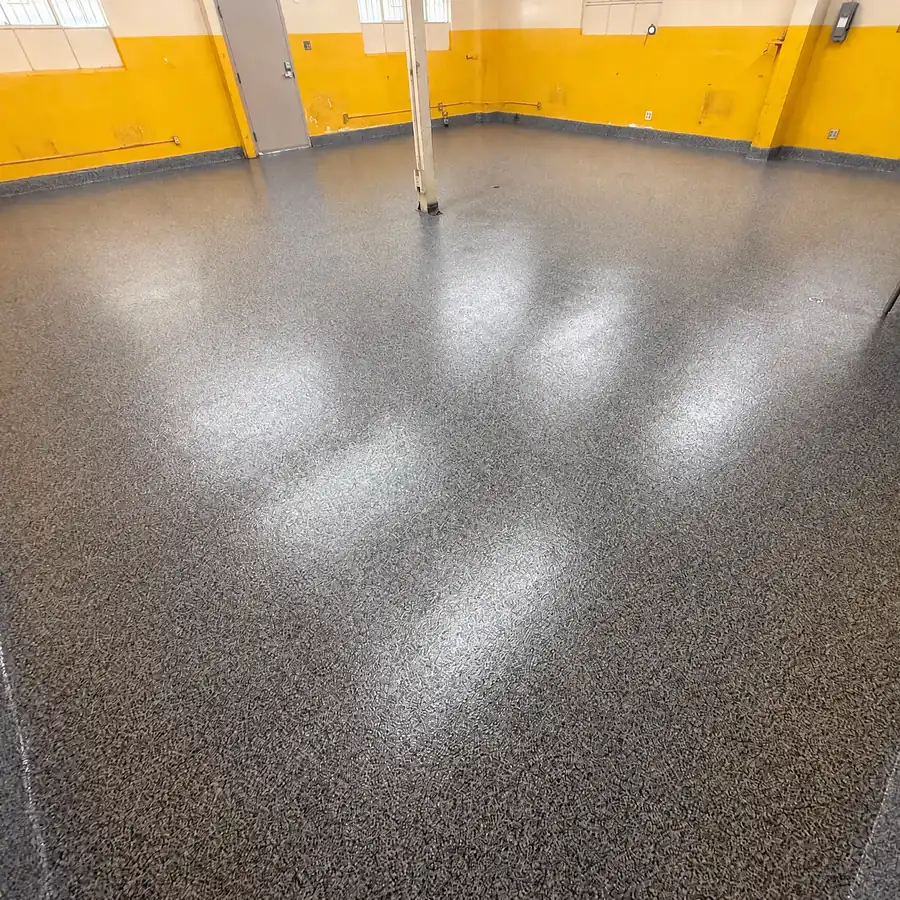
A broadcast system is built in layers. A pigmented epoxy basecoat goes down over the ground slab, and colored quartz or sand is thrown into it until the surface is covered. After the first layer sets, a second coat and a second broadcast build depth, which is why these are called double broadcast systems. Loose aggregate is scraped and vacuumed away, and a topcoat locks everything in.
Quartz and sand do different work. Decorative quartz keeps its color from the granules and sits under a clear topcoat, so the finished floor looks speckled like stone. A sand finish takes its color from pigmented topcoats applied over it, so the surface reads as one even color with the same strong texture underneath.
Compared with a thin roll-on coat, a broadcast floor is thicker, grippier and much more forgiving of scratches, which is why it shows up in shops, kitchens and loading areas. It takes 2-3 days, longer than a one-day flake garage, because the layers are given their cure windows. The speckled alternative is on the flake epoxy page.
Can you pressure wash an epoxy floor? Commercial kitchens, prep rooms and wash bays
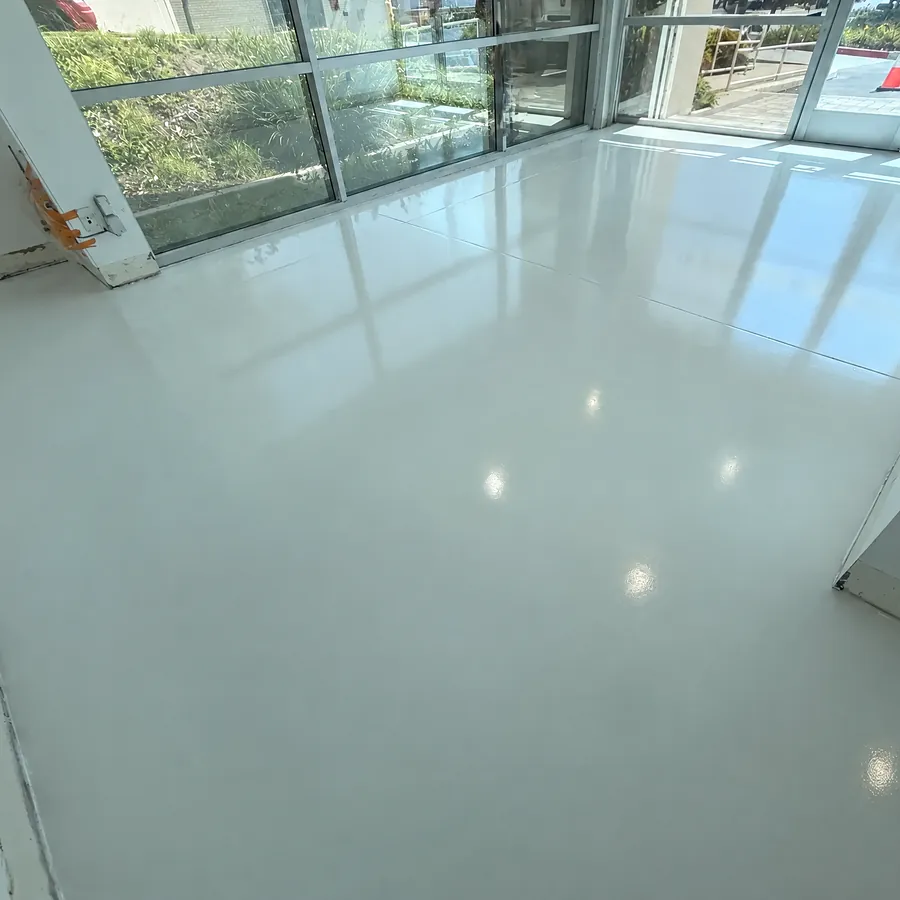
Kitchens put a floor through steam, grease, cleaners and constant wet traffic. Quartz broadcast is the usual answer for grip, a chemical-resistant topcoat handles the cleaning routine, and a cove base carries the coating up the wall so water cannot creep under an open edge.
Hot water is the detail that gets missed. Washdowns and steam stress a coating more than cold water does, and every coating maker publishes temperature and chemical limits for its products. Tell us how hot the water runs, what the cleaners are and how often the floor is washed, and we will build the quote around those limits.
Drains and slopes matter as much as the coating. A floor that does not shed water holds it, and no topcoat fixes a slab that drains the wrong way. We mark where water needs to travel, where equipment sits and where the coating has to stop, and we write it down before work begins.
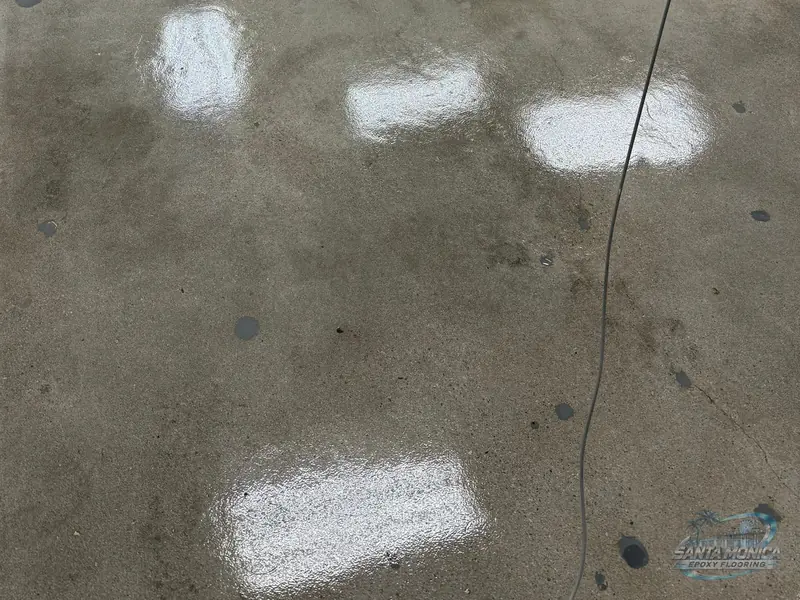
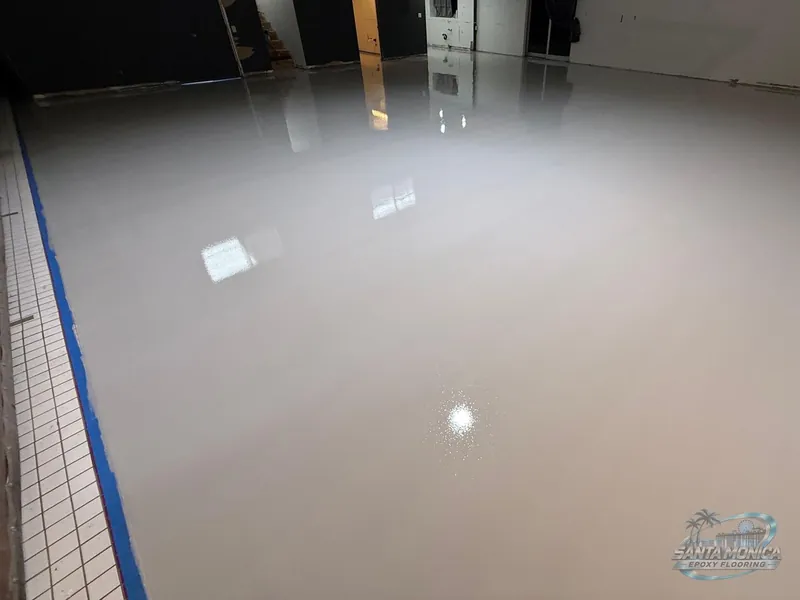
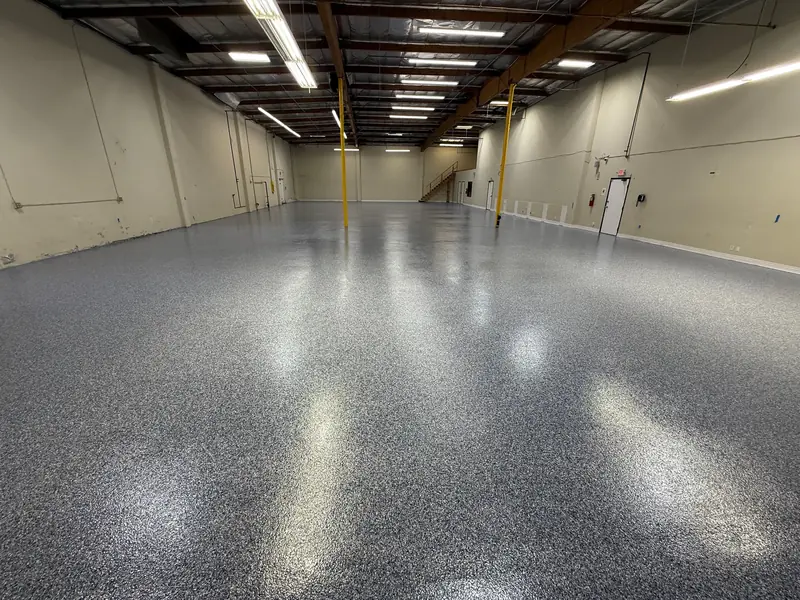
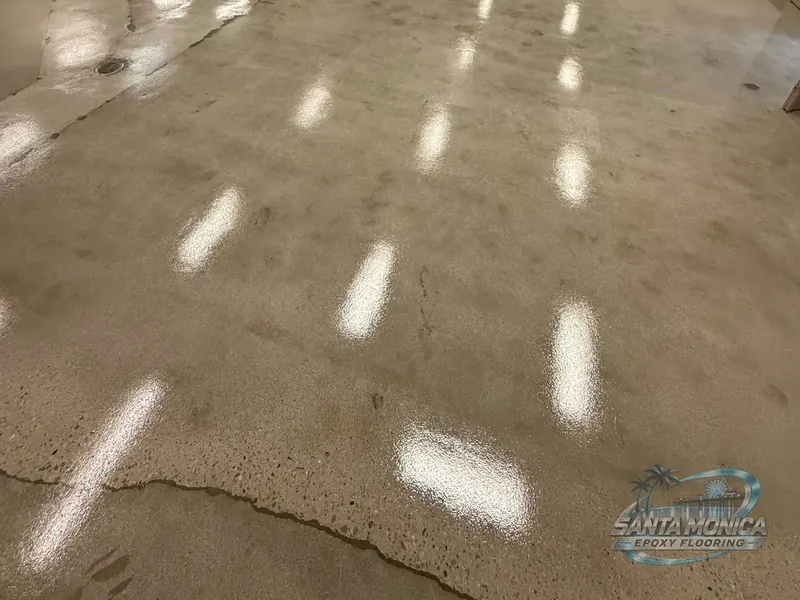
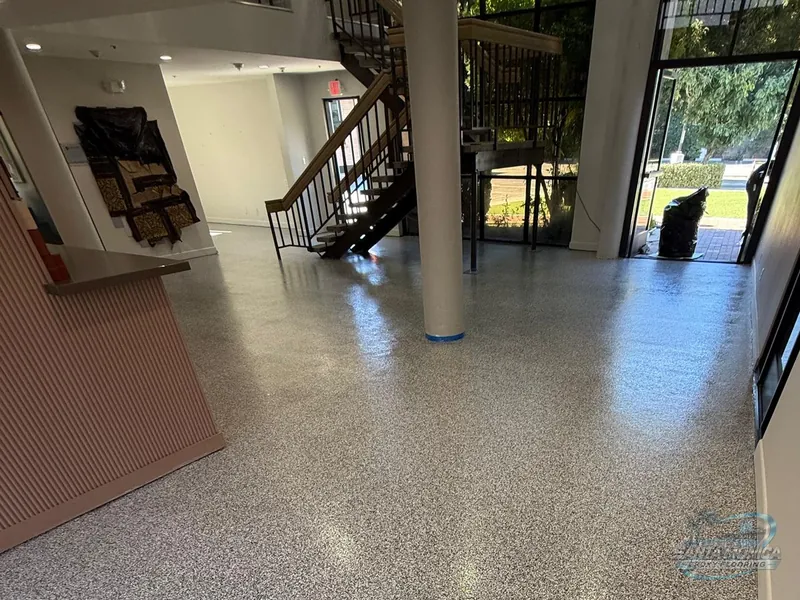
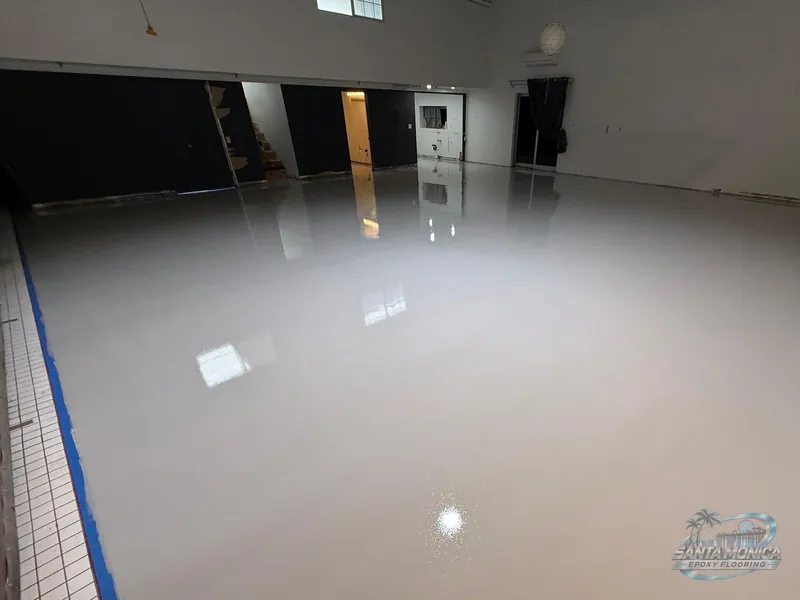
Textured and heavy-duty floors, up close
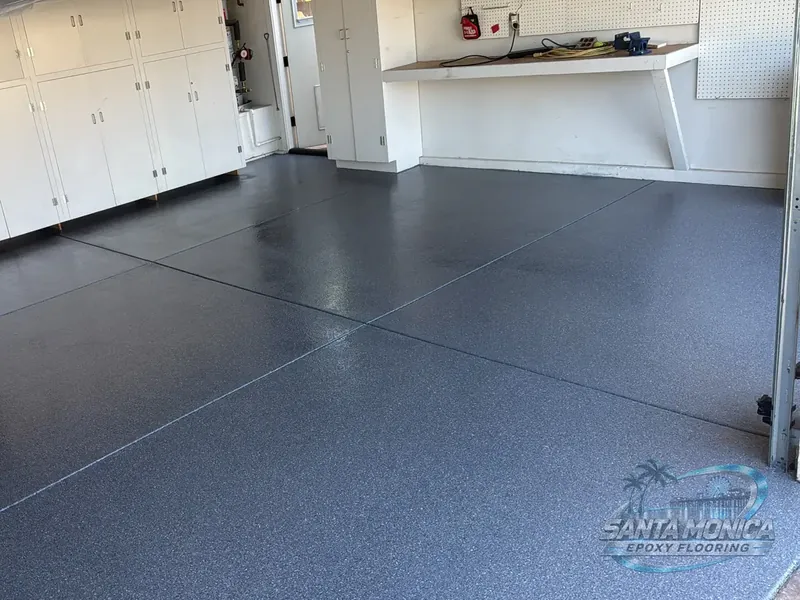
Zoom in on the texture in each photo, since grip is the point of these systems.
Grinding, joints and spalls: the work before any coating
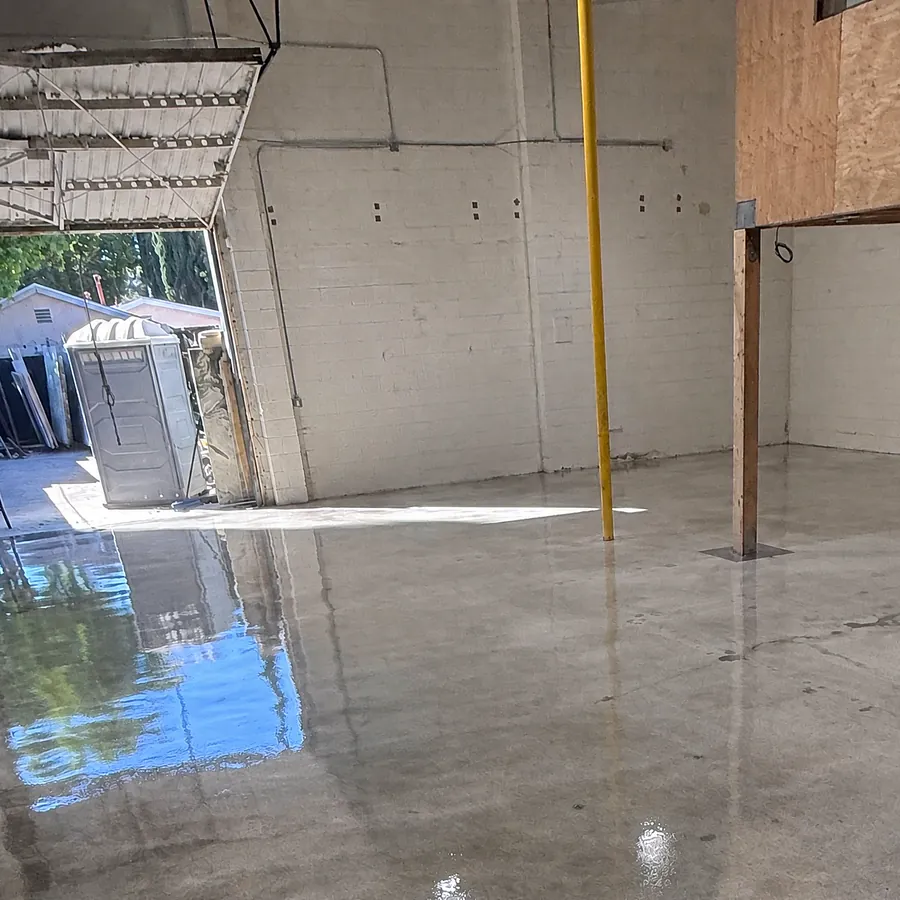
Industrial prep starts with diamond grinding to remove old coatings, line paint, sealers and the glaze left by wheel traffic. Grinding throws fine concrete dust, so we run HEPA vacuums as we go. Cracks and spalls are repaired and ground flush so they do not telegraph through the finished floor.
Joints deserve respect. Concrete moves, and a rigid coating bridged across a working joint will crack along it. Saw-cut and expansion joints are treated according to the coating maker's instructions, usually with flexible filler, instead of being hidden under a hard layer. Tell us about any joints that have already spalled so we can plan the repair.
We test moisture with a calcium chloride test or in-slab RH probes, because the coating maker's limits decide whether the build needs a moisture-barrier epoxy basecoat. Oil-soaked concrete may need extra cleaning or a different approach, and we say so at the visit instead of promising a clean result. The post on why epoxy floors peel shows how skipped prep turns into failure.
What a quartz or sand finish costs per sq ft in Santa Monica
A quartz or sand finish in Santa Monica runs $9-$16.50 per sq ft as a reference and takes 2-3 days. Industrial jobs are quoted after a free site visit, because loads, chemicals and joint repair change the build.
| System | Per sq ft | Typical 2-car garage | Install time |
|---|---|---|---|
| Quartz & sand finish | $9-$16.50 per sq ft | $3,600-$6,600 | 2-3 days |
VOC limits and why the coating class matters
In the South Coast Air Quality Management District, Rule 1113 sets a 50 g/L limit for floor coatings, a class that covers coatings applied to garage floors and similar surfaces and excludes industrial maintenance coatings. Industrial maintenance coatings have a separate class with a 100 g/L limit, and the rule defines them as coatings for surfaces, including floors, that face extreme conditions such as immersion in water or chemical solutions, corrosive agents or repeated exposure above 250 F.
Which class applies to a particular floor is a question for the coating maker and the facts of the building, not a marketing line. We read the data sheet for the product we propose and tell you what it states, and we do not describe any product as VOC-free unless its safety data sheet says so.
Industrial customers sometimes ask for compliance paperwork. Ask for the data sheet when you request the quote, and we will send it with the proposal so your facility manager can review it.
Planning a heavy build around a working shop
Owners who search for industrial epoxy flooring in Los Angeles usually want a price first, and the honest answer is that a building is quoted after we walk it. Industrial customers rarely have a quiet week. The 2-3 day broadcast schedule is easier when the area can be emptied, so we plan the sequence with you: which bay goes first, where stock moves in the meantime, and when forklifts can return. Phased work is possible in larger buildings, with each zone cured before traffic returns.
Return-to-service times depend on the system, the weather and the loads the floor will carry, so we give them in writing for your build and not as a blanket number. Forklifts and pallet traffic are decided by the thickness of the build and the condition of the joints, and the coating maker's data sheet sets the limits.
Industrial and commercial are different jobs with different quotes. If your space also faces customers, the commercial page covers phasing and nights and weekends, and the pricing guide shows how all the systems compare.
Industrial epoxy questions from Santa Monica shops and kitchens
How much does industrial epoxy flooring cost in Santa Monica?
Industrial epoxy is quoted after a free site visit, with quartz and sand finish broadcast systems running $9-$16.50 per sq ft as a reference. Loads, chemicals, joint repair and old coating removal change the number, so we walk the building before writing a quote.
What is a quartz broadcast floor?
It is colored quartz granules thrown into a wet epoxy basecoat, covered a second time after a second coat, and sealed under a topcoat. The result is thick, grippy and hard-wearing, which is why shops, kitchens and loading areas use it. The install takes 2-3 days.
Can epoxy take forklift traffic?
It can when the build and the slab are right. The thickness of the system, the condition of the joints and the wheel loads all matter, and the coating maker's data sheet sets limits. We discuss your equipment at the site visit and size the build to the loads.
Does industrial epoxy handle oil and chemicals?
A proper topcoat resists many oils and chemicals, but resistance depends on the product and the exposure. Some fluids and high-performance tires can stain any coating. Tell us what spills on your floor and we will check the coating maker's chemical data before we specify the build.
What is Rule 1113, and does it apply to my floor?
Rule 1113 is a South Coast Air Quality Management District rule that sets a 50 g/L VOC limit for floor coatings and a separate 100 g/L limit for industrial maintenance coatings. Which class a floor falls into depends on its exposure, so we read the data sheet with you.
How does the warranty apply to an industrial floor?
Our limited lifetime adhesion warranty covers adhesion of the coating to the prepared slab, with written terms provided at the estimate. Damage from impact, chemicals or concrete movement falls outside it. Tell us about your equipment and chemicals so the build matches how the floor is used.
What is more durable than epoxy flooring in an industrial building?
A double broadcast quartz or sand epoxy under a polyaspartic topcoat is among the most durable systems we install for shops, kitchens and loading areas. A few conditions call for something else, such as constant steam or extreme heat. The coating maker's data sheet sets the limits, and we name them before you commit.
When should you not use epoxy flooring in a shop or warehouse?
Avoid it over a slab with unaddressed moisture, joints that are still moving, or exposure beyond the coating maker's heat and chemical limits. A rigid coating bridged across a working joint will crack along it. We test the slab and read the data sheet first, and we tell you plainly if another surface suits the space better.
Can you pressure wash an epoxy floor in a wash bay or kitchen?
Yes, a cured and well-bonded floor is built to be washed, within the coating maker's limits for water temperature, pressure and cleaners. Hot water and steam stress a coating more than cold water does. Tell us how the floor is washed and we will size the build to match.
How long does an industrial epoxy floor last?
Service life depends on loads, chemicals, prep and the system, so we do not promise a number of years. A diamond-ground slab, a thick double broadcast build and a topcoat suited to your exposure give the floor its best chance. Forklift wheels, dropped steel and harsh chemicals shorten the life of any coating.
Industrial epoxy near Santa Monica
Searching for epoxy flooring near me from El Segundo, Hawthorne, Inglewood, Torrance or Culver City? Those South Bay and Westside industrial areas are covered from our Stanford Street shop.
Where to go next
Weigh polyaspartic floor coatings for fast-cure topcoats, read about epoxy and polyaspartic compared, see finished projects or contact us to book a free site visit.