
Metallic Epoxy Floors in Santa Monica, CA
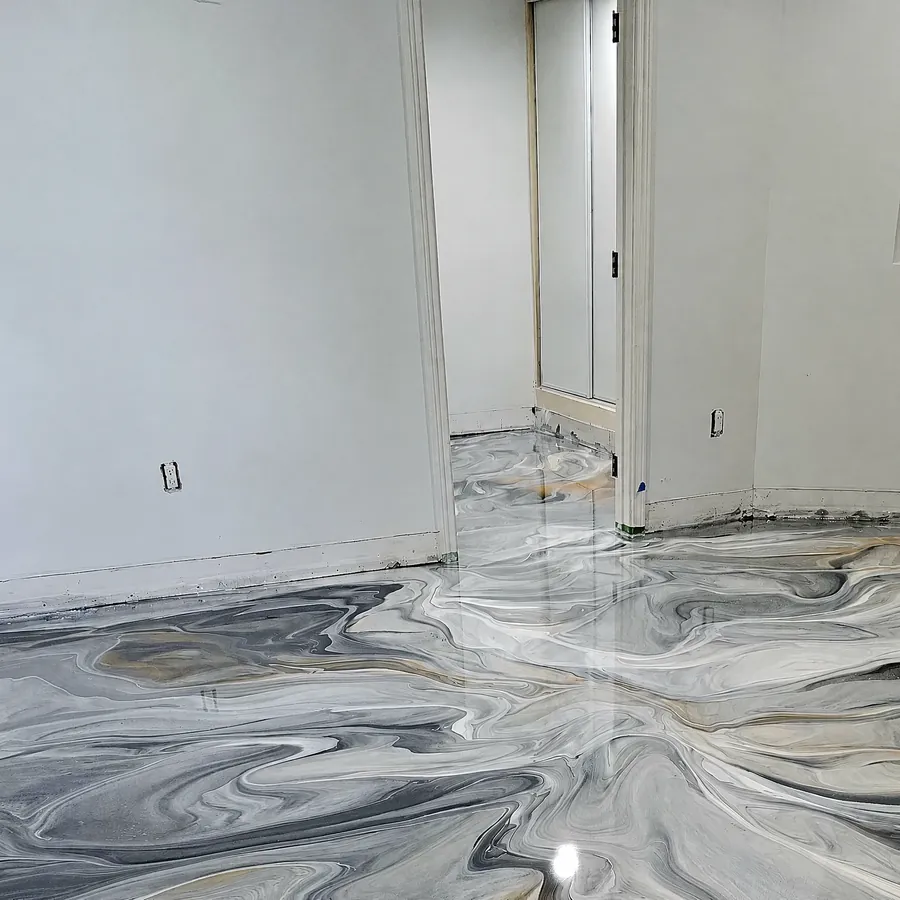
A metallic pour turns plain concrete into a swirled, marble-look surface that no other floor on the Westside will copy, finished in three to four days.
Limited lifetime adhesion warranty · Free on-site estimates · Shop at 1653 Stanford St #1, Santa Monica
Free On-Site Estimate
How much do metallic epoxy floors cost in Santa Monica?
Metallic epoxy floors in Santa Monica cost $12.50-$18.50 per sq ft, which puts a typical two-car garage of up to 400 sq ft at $5,000-$7,400. The install takes 3-4 days because each layer cures before the next one goes down, and every floor is worked by hand, so no two come out alike.
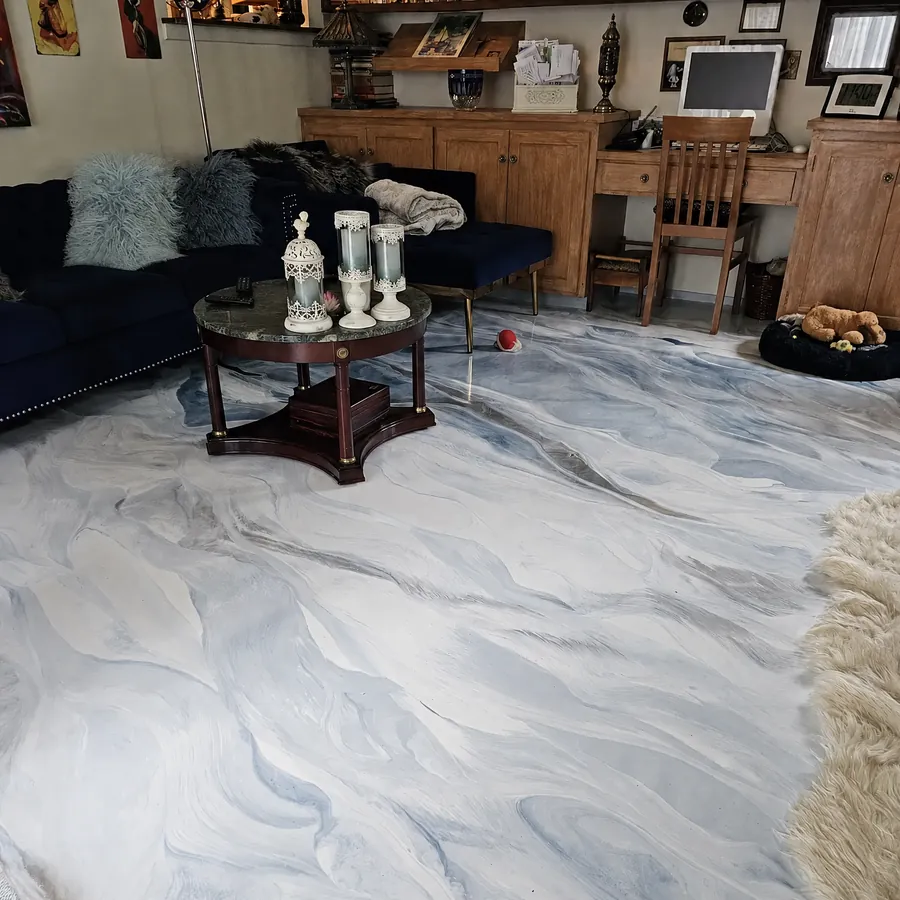
This is the system we recommend when the floor itself is the feature: a living room, a home gym, a studio, a shop window or a garage that doubles as a showroom. Pick pigments from the color chart, then read on for how the pour works, what the slab needs and where a different system is the smarter choice.
Marble-look floors made by hand, one pour at a time
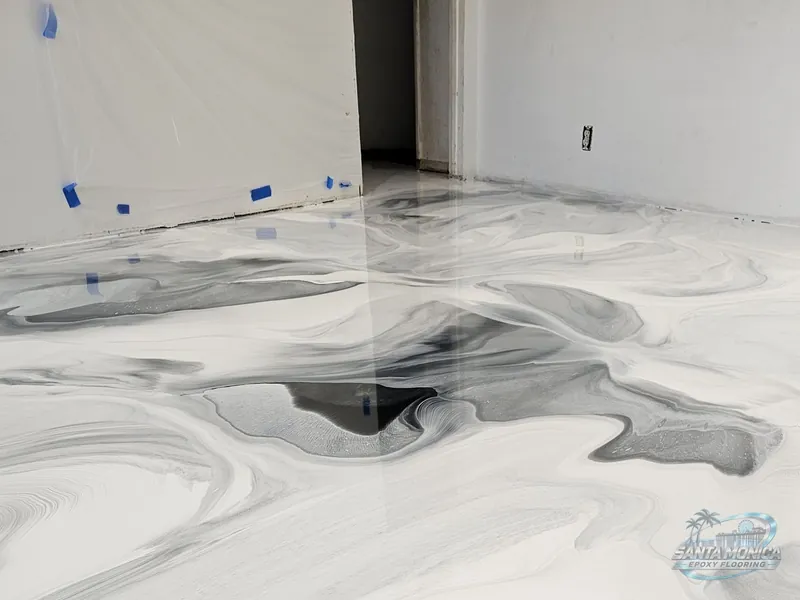
A metallic floor starts the way every durable coating starts: a diamond-ground slab, repaired cracks and a primer that bonds to the prepared concrete. What happens next is different, and it is why people who start out searching for a concrete epoxy floor or an epoxy resin floor often end up asking about metallic. A base color goes down, then clear epoxy loaded with metallic pigment is poured over it in ribbons and moved with rollers, squeegees and other hand tools until the pigment drifts into clouds, veins and pools.
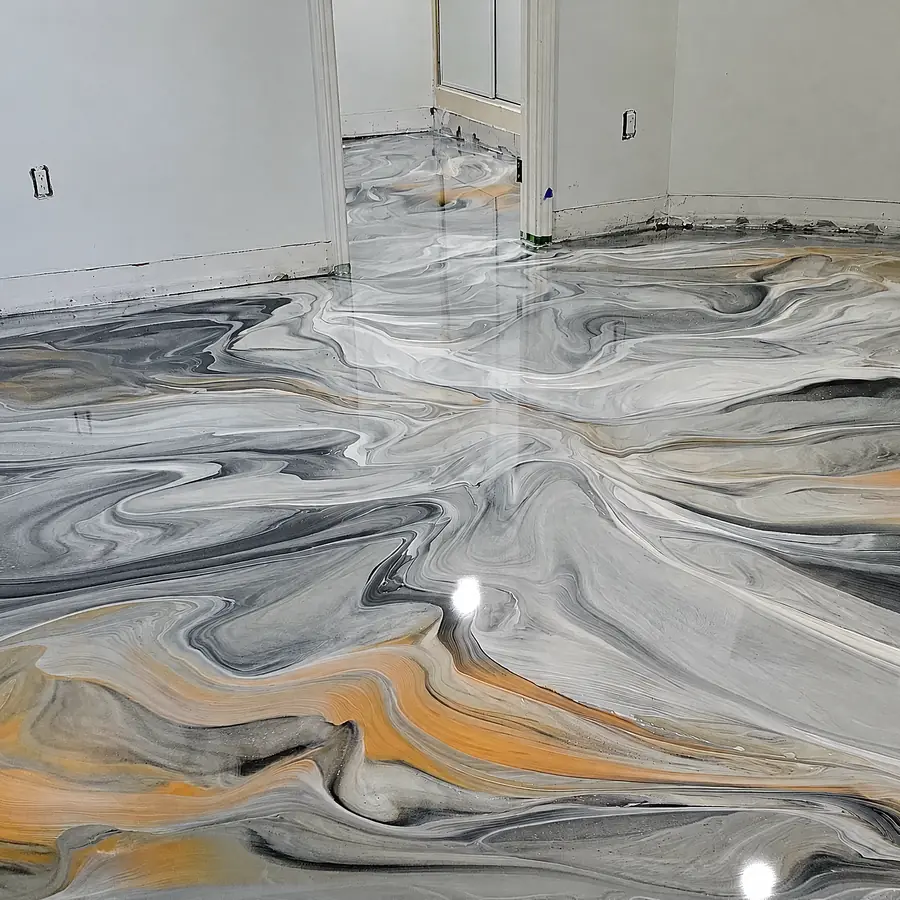
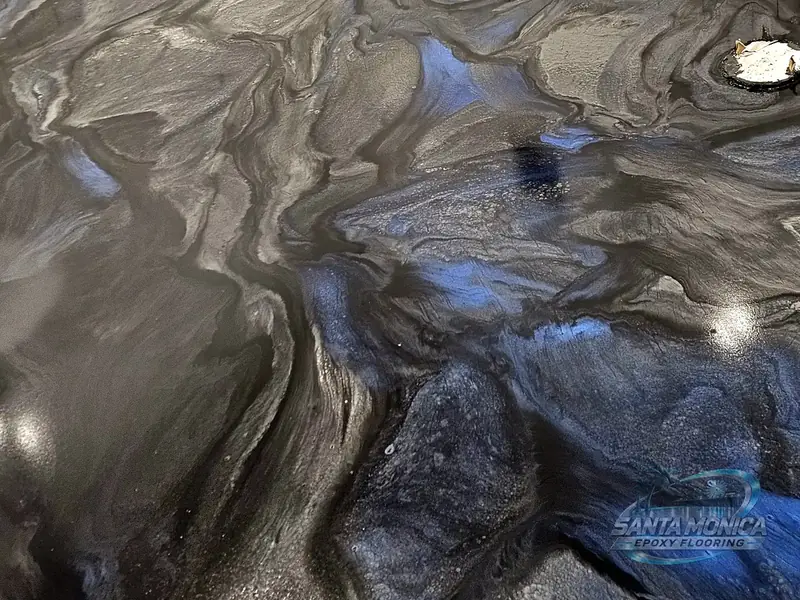
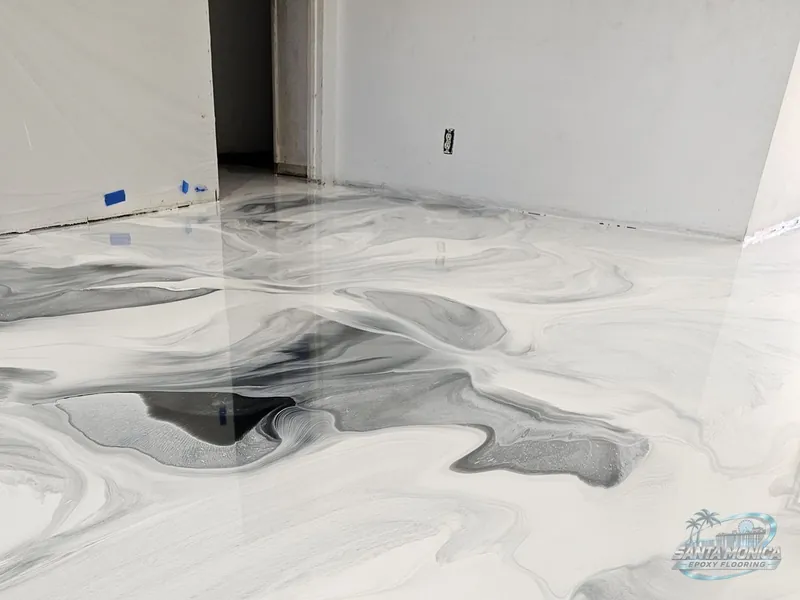
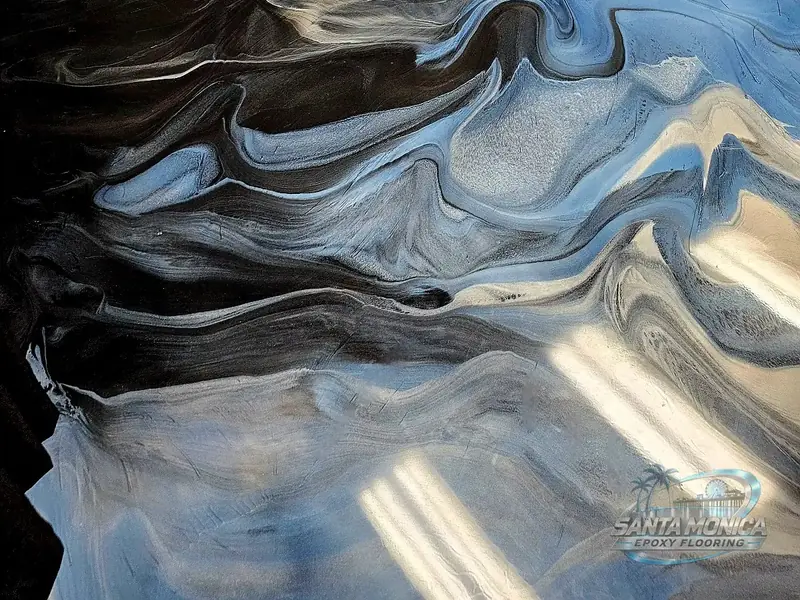
Because the resin keeps flowing while it is worked, thin areas turn bright and streaky and deeper areas turn dark and cloudy. The installer decides where to push the material and where to leave it alone. That is why one finished floor can look like polished marble, another like a stormy sea and a third like smoke rising off water.
A clear topcoat then locks the effect under a deep, glassy surface. It is the reason metallic suits rooms that people look at, and it is also why we never promise a duplicate of a photo. What we promise is the same craft on every slab, and the pour decides the details.

Is a metallic epoxy floor worth it? Rooms where it earns its price
Metallic is a design choice first and a protective coating second, so it works best where the floor is part of the room.
| Space | Why metallic fits | What to plan for |
|---|---|---|
| Living room or den | One seamless surface with no grout lines to scrub, and a finish that reads as a design feature. | A flat, dry slab, plus area rugs where you want something softer underfoot. |
| Home gym or studio | Smooth, wipeable and unbroken, which suits mirrors, daylight and bare feet. | Rubber mats under racks and weights, since dropped plates can mark a clear topcoat. |
| Retail shop or showroom | The floor becomes part of the display, and a gloss finish pushes light back into the room. | Rolling carts and heavy foot traffic scuff gloss over time, so we talk through sheen first. |
| Show garage | A collector's car or a finished workshop gets a floor worth parking beside. | Busy working garages are usually better served by flake, covered below. |
| Entry or hallway | A bold first impression in a small footprint, which keeps the total contained. | A slip additive in the topcoat if wet shoes come through daily. |
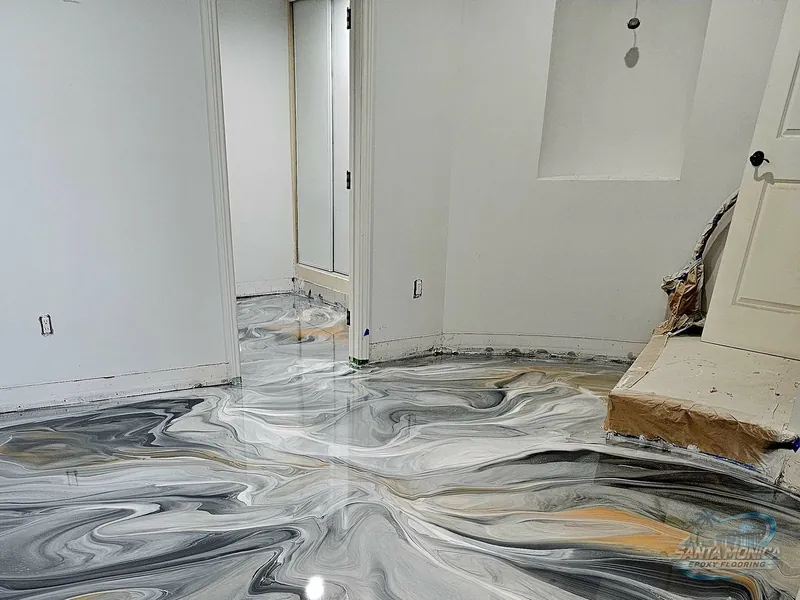
Metallic pours, close up
Tap any photo to enlarge it and look at how the pigment swirls, pools and breaks across the surface.

Choosing pigments and base colors from the chart
The color chart lists 24 metallic pigments. The neutrals and metals are Black, Bronze, Brown, Coffee, Crystal White, Gold, Grey and Silver. The cool range runs through Apple Green, Crystal Green, Forest Green, Magic Blue, Silver Blue, Sky Blue and Special Blue. The warm range includes Bright Purple, Crystal Pink, Iris, Light Purple, Orange, Pink, Rose, Scarlet Red and Yellow.
Each swatch on the chart shows the base color, not the finished floor. The final tone comes from pairing a base with a pigment and from how the pour is worked, so the same Silver can look like brushed steel over a dark base and like pale water over a light one.
Dark bases with Silver or Silver Blue give the classic storm-cloud look. Coffee, Bronze and Gold read warm, like polished stone, and sit easily in a living room. Scarlet Red or Magic Blue are statement choices for a studio or shop. If you are still comparing finishes, the flake vs metallic vs solid guide sets them side by side.
We lay physical samples on your own slab at the free estimate, because a screen cannot show how a metallic surface catches daylight differently from overhead lights.
How a metallic floor goes down, step by step
A metallic floor follows its own schedule, not the one-day flake routine. Three to four days on site is typical because each layer needs time to cure before the next one goes on.
- Slab check We walk the floor, mark cracks and test the slab for moisture with a calcium chloride test or an in-slab RH probe before choosing a primer.
- Diamond grinding The concrete is ground to a bonding profile with HEPA-vacuumed dust control and no acid etching.
- Repairs Cracks, pits and spalls are filled and ground flush, because thin metallic resin shows every ridge.
- Primer A bonding primer goes down, with a moisture-barrier epoxy basecoat in its place where the slab test calls for one.
- Base color A pigmented epoxy base is rolled out and left to cure, and its color shapes the tone of everything poured over it.
- Metallic pour Clear epoxy loaded with metallic pigment is poured in ribbons and worked by hand until the movement looks right.
- Cure time The pour sits undisturbed while it cures, and this is the step that stretches a metallic job to three or four days.
- Clear topcoat A clear topcoat seals the effect, a UV-stable polyaspartic topcoat is used where sun reaches the floor, and a slip additive can be added where it will get wet.
Why metallic depends on flat, dry, sound concrete
Metallic resin flows downhill. Wherever a slab dips, pigment pools and darkens, and wherever a ridge or old patch sits, a line shows through the finish. That makes grinding and repair the most important hours of the job rather than an add-on.
Santa Monica slabs vary. American Community Survey figures put the median home here at about 1967 construction, and regional planning data reported by the Santa Monica Daily Press says roughly 70% of units predate 1980. Older garages, patios and rooms often carry oil stains, past paint or patched cracks, so we read each slab before pricing it.
Moisture moving up through a slab can lift any coating. That is why the moisture test comes before the primer, and the coating maker's limits decide the build. Prep that can move a quote higher is priced only after we see the floor:
- Grinding off an old coating, sealer or paint
- Removing carpet glue, tile mastic or mat adhesive
- Advanced crack and spall repair
- Moisture mitigation on a slab that reads damp
- Extra work for tight access or oil-soaked concrete
What are the disadvantages of metallic epoxy, and when is flake the better call?
Gloss shows things. Dust, fine beach sand, scratches from dragged furniture and tire marks all read more on a smooth metallic surface than on a speckled floor. For a working garage with jacks, tools and daily car traffic, a full-broadcast flake floor hides wear better and installs in a single day.
For rooms people look at, metallic wins. If you want one quiet color with no pattern, solid color epoxy costs less per sq ft. Slabs that sit in direct sun belong with the polyaspartic patio and pool deck coatings, because standard epoxy can amber under strong light.
Gloss and grip pull in opposite directions. Where a floor will see wet feet, ask for a slip additive in the topcoat. For everyday care, a soft mop and mild cleaner are enough, and the cleaning guide covers the routine.
What a Santa Monica metallic floor costs
Metallic epoxy runs $12.50-$18.50 per sq ft, and solid color epoxy sits beside it for comparison. The smallest job we take is $2,600, and prep beyond a sound, clean slab is priced after we see the floor.
| System | Per sq ft | Typical 2-car garage | Install time |
|---|---|---|---|
| Metallic epoxy | $12.50-$18.50 per sq ft | $5,000-$7,400 | 3-4 days |
| Solid color epoxy | $9.50-$11.50 per sq ft | $3,800-$4,600 | 3 days |
What the estimate covers and what the warranty does
Every project carries a limited lifetime adhesion warranty. It covers adhesion of the coating to the prepared slab, and the written terms come with your estimate. It does not cover damage from impact, chemicals or concrete movement, so read the terms before you sign.
The free estimate happens on site. We look at the slab, test for moisture, show pigments and base colors on samples and put the quote in writing. You can then compare it with the numbers on the epoxy flooring cost page and the price breakdown for garage floors.
Samples are also on view at our shop on Stanford Street in the Pico neighborhood. Call (310) 853-8972 Monday to Thursday from 8 am to 5 pm or Friday from 8 am to 2 pm, or use the contact page to request a visit.
Metallic epoxy questions, answered
How much does a metallic epoxy floor cost in Santa Monica?
Metallic epoxy costs $12.50-$18.50 per sq ft, or $5,000-$7,400 for a typical two-car garage of up to 400 sq ft. Where your slab lands in that range depends on its condition and the prep it needs. Projects start at $2,600, and the written quote follows a free on-site visit.
How long does a metallic epoxy floor take to install?
Plan on three to four days on site. The metallic layer is worked by hand and every coat needs time to cure before the next one goes on, so the job runs longer than a one-day flake garage floor.
Can metallic epoxy go inside a house, studio or shop?
Yes. Living rooms, home gyms, studios and retail spaces are common choices because the surface is seamless and wipes clean. The slab has to be flat and dry, so we test moisture first and grind to a bonding profile before any color goes down.
Will my floor look like the photos?
It will look similar in spirit but never identical. The pigment moves while the resin is worked, so each pour is one of a kind. Samples show color families and base pairings, not the exact pattern, which is why we lay them on your slab at the estimate.
Is a metallic epoxy floor slippery?
It is glossy by design, so a wet metallic surface can feel slick. A grit additive can be mixed into the topcoat for entries, bath areas or anywhere shoes come in wet. Tell us at the estimate where the floor will be used, and we adjust the finish.
What is the downside of metallic epoxy flooring?
The main downside is that a glossy surface shows wear. Dust, sand, scratches from dragged furniture and tire marks are easier to see on metallic than on speckled flake, and the finish can feel slick when wet unless a grit additive is used. A busy working garage is usually better with flake.
Will a metallic floor turn yellow in the sun?
Standard epoxy can amber under strong direct light. Where daylight reaches the floor, we specify a UV-stable polyaspartic topcoat to protect the color. Slabs that sit fully outdoors are a different job, and the polyaspartic coating page covers those systems.
How long does a metallic epoxy floor last, and what does it look like after five years?
Indoors, a well-prepared metallic floor under a clear topcoat keeps its depth and gloss for many years of normal use, and a UV-stable polyaspartic topcoat protects the color where daylight reaches it. Expect fine scuffs and some dulling along the busiest paths. Slab prep, furniture care and traffic set the lifespan.
Is a metallic epoxy floor waterproof?
The cured surface is seamless and sheds spills and mop water, but no coating makes the slab itself waterproof. Moisture rising through concrete can lift any coating, so we test with calcium chloride or an in-slab RH probe before choosing a primer, and the coating maker's limits decide the build.
Does a metallic epoxy floor add value to a home?
It can make a room more appealing, but we cannot promise a resale figure. A metallic floor is seamless, easy to wipe and rarely duplicated, which many buyers notice, while the real value depends on the room, the quality of the slab prep and your market. Ask your agent about your specific home.
More Santa Monica floor systems
Compare garage floor epoxy, commercial epoxy flooring and industrial quartz and sand finish floors, browse the project gallery, read about the company and see every place we serve, including Venice, Brentwood and Culver City.