
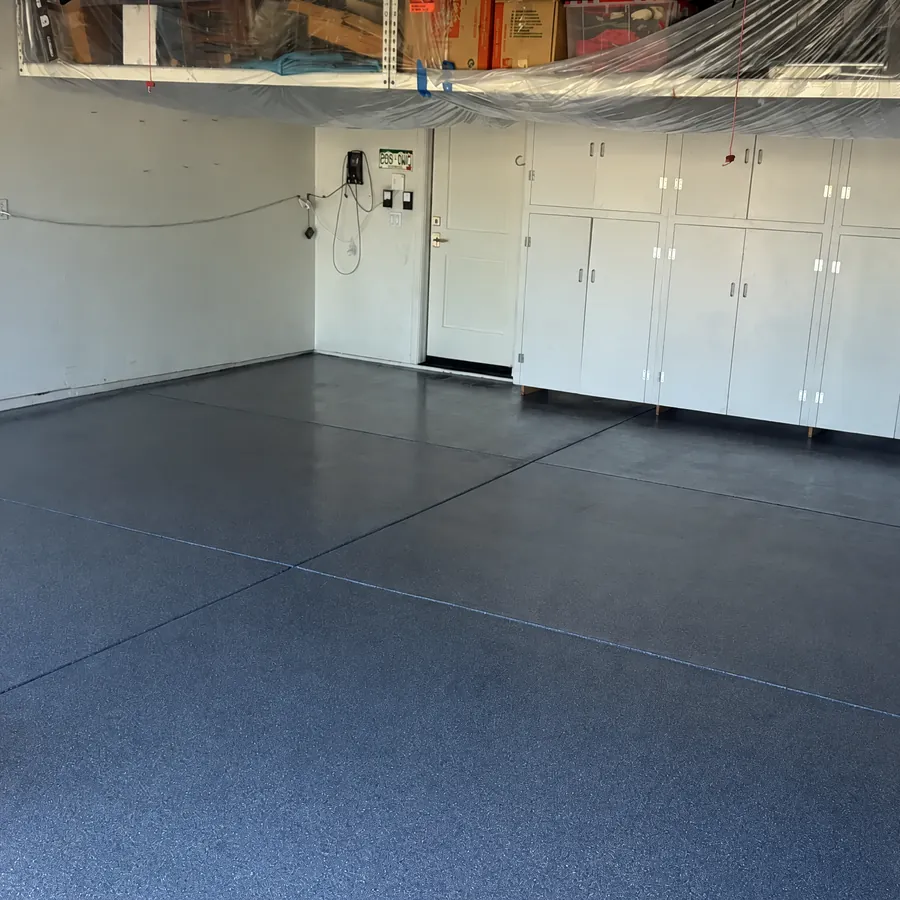
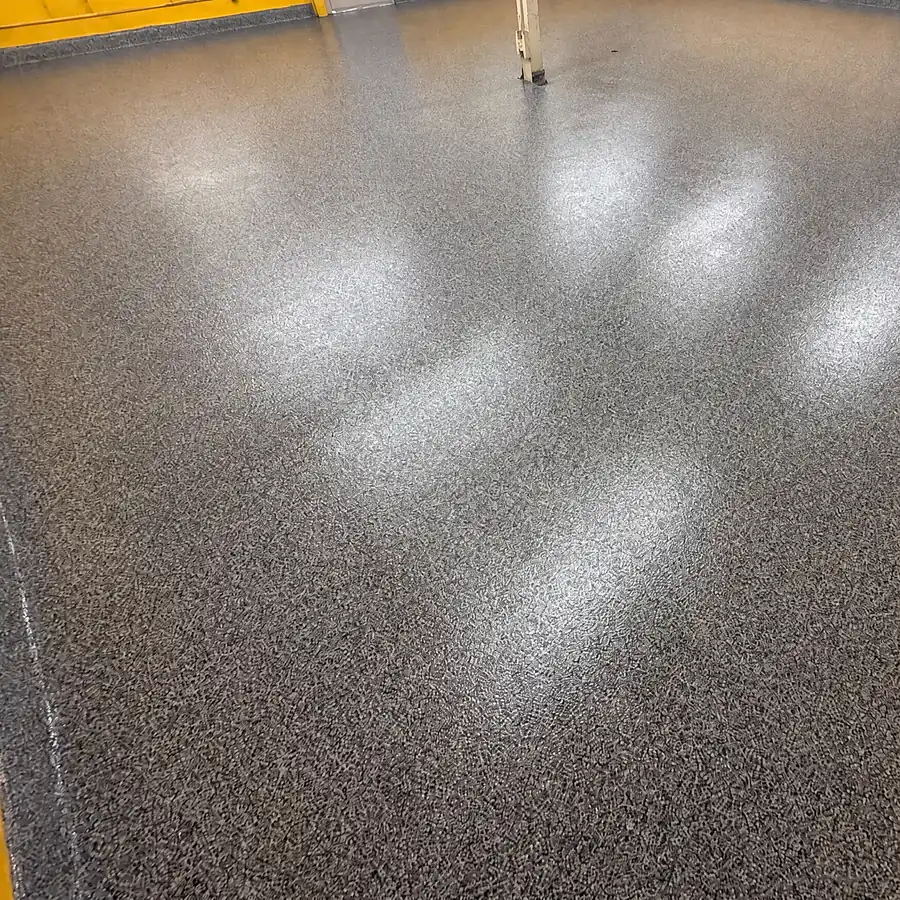
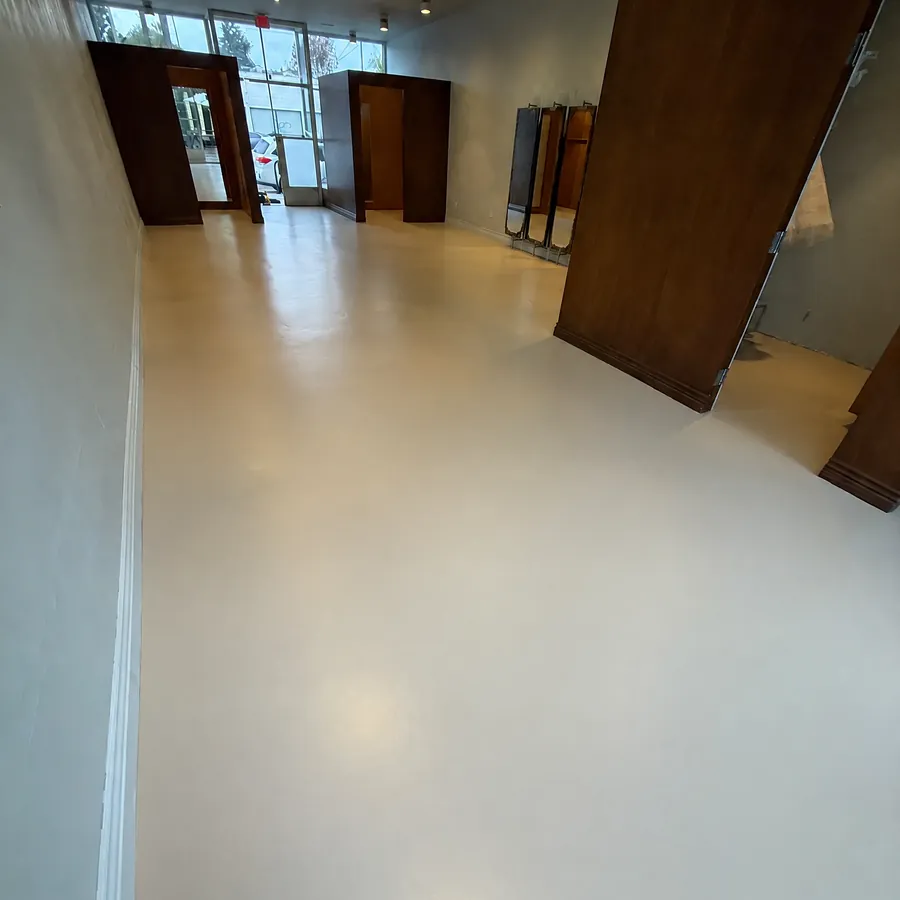
Epoxy Garage Floor Coating in Santa Monica, CA
A ground, tested and sealed garage floor that handles daily parking, dripping fluids and damp coastal mornings, installed in a single day for most two-car garages.
Limited lifetime adhesion warranty · Free on-site estimates · Shop at 1653 Stanford St #1, Santa Monica
Free On-Site Estimate
How much does an epoxy garage floor cost in Santa Monica?
An epoxy garage floor in Santa Monica costs $2,600-$4,000 for a typical two-car garage of up to 400 sq ft with our flake system, installed in one day. Solid color runs $3,800-$4,600 and metallic $5,000-$7,400. Projects start at $2,600, and the slab's condition sets the final number.
People searching for garage floor coating Santa Monica contractors usually want three answers: what it costs, how long the car stays out, and whether the floor will last. This page gives all three, along with how we prepare older slabs, what to clear before install day and how the coating behaves under hot tires.
The garage floor is also where most of our estimates begin. If you are comparing builds first, the flake epoxy page explains the layer options in detail, and the epoxy flooring cost guide sets every system side by side.
What to clear out of the garage before we arrive
The coating can only bond where we can reach bare concrete, so the floor needs to be empty from wall to wall. Cars, bikes, workbenches on wheels, shelving units, storage bins and anything resting on the slab all have to move out. Wall-mounted racks and overhead storage can stay, as long as nothing hangs low enough to brush the fresh surface.
Chemicals deserve a separate mention. Paint, solvents, fuel cans and propane tanks should leave the garage for the day, because grinding and coating both call for open air and a clear working space. Freezers and spare refrigerators also need to come out, since we cannot coat under a unit that cannot be lifted, and a washer or dryer set along one wall has to be shifted or the coating will stop short of it.
Plan for the vehicles to stay elsewhere until the cure window we give you has passed. Many Santa Monica households park on the street, so ask about guest permits or a driveway swap a few days ahead. The cure time guide explains what happens to a coating that is driven on too soon.
If you live in a condo or an apartment building with a shared garage, speak with building management or your association before you book. Some buildings have scheduling rules, notice requirements or limits on noise and fumes, and it is easier to settle those before a crew shows up than after.
- Vehicles, bikes, scooters and boards off the slab
- Storage bins, shelving and anything with feet on the floor
- Paint, solvents, fuel and propane out of the garage
- Freezer, refrigerator and laundry machines moved or ready to move
- Clear access for the roll-up door and a spot on the driveway for our equipment
Older Santa Monica garages and what their slabs carry
Census-based housing figures put the median Santa Monica home at about 1967, and roughly 70 percent of units were built before 1980. Only about one home in five is a single-family house, while most of the rest sit in multi-family buildings. In plain terms, many local garages are older concrete that has had decades to collect oil, paint, patches and hairline cracks.
That history does not rule out a coating, and it is why owners searching for garage floor repair or a concrete garage floor coating often start with a slab inspection. It does shape the preparation. Before we quote, we look for old sealer or paint that has started to lift, damp spots that return after a dry week, and patches that have sunk or crumbled. A quick test with a splash of water tells us a lot: if it beads on the surface, something is sitting on top of the concrete that grinding will have to remove.
We also test the slab with calcium chloride or an in-slab RH probe, because a coating that would be fine on a dry slab can blister over a damp one. The coating maker's moisture limits decide whether a standard basecoat is enough or whether the garage needs a moisture-barrier layer first.
The cost of that preparation is built into the estimate in plain lines, so you see what the grinding, crack repair and any stripping add. If you want to know why prep matters so much, our post on why epoxy garage floors peel walks through the usual causes.
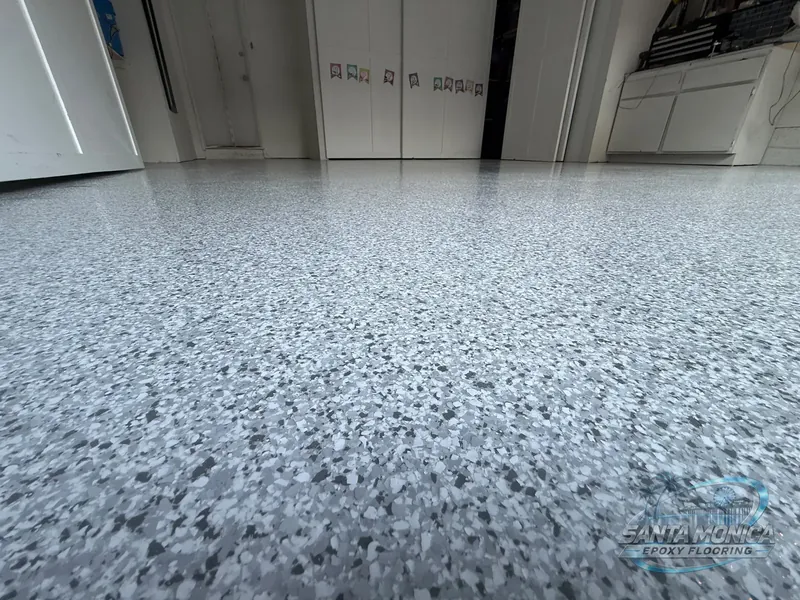
Four ways to finish a two-car garage
These figures apply to a typical two-car garage of up to 400 sq ft. Larger garages are priced from the per-square-foot ranges in the price table below.
| System | Typical two-car price | Install time | Look |
|---|---|---|---|
| Flake epoxy | $2,600-$4,000 | 1 day | Speckled, textured, hides dust |
| Solid color epoxy | $3,800-$4,600 | 3 days | Smooth, single color |
| Metallic epoxy | $5,000-$7,400 | 3-4 days | Swirled, glossy, one of a kind |
| Grind and seal | $2,600-$3,600 | 1-2 days | Natural concrete with a clear seal |
The installed price depends on slab condition and the build. Every estimate lists the work in writing.
Is a garage floor coating worth it? Hot tires, drips and daily wear
A parked car is harder on a coating than most people expect. Tires heat up on the road and soften whatever they touch, which is how a weak floor ends up with raised, peeled patches where the tires sit. The term for it is hot-tire pickup, and the defense is a well-bonded basecoat under a UV-stable polyaspartic topcoat that stays hard when warm.
Fluids are the second test. Brake fluid, coolant, battery acid and gasoline are all part of garage life, and a sealed floor lets you wipe them off instead of letting them soak into the pores. Be realistic, though: some automotive fluids and a few high-performance tires can still leave a mark, and no coating makes concrete stain-proof.
Sunlight matters because many garages face the street with the door open for hours. Polyaspartic holds its clarity in that light, while a plain epoxy topcoat can yellow or chalk over time. That difference is the main reason we pair epoxy bases with a polyaspartic finish. The polyaspartic floor coatings page covers it in more depth.
Everyday care is simple: sweep, damp-mop with a mild cleaner, and avoid harsh solvents. Our floor cleaning guide lists what to use and what to skip.
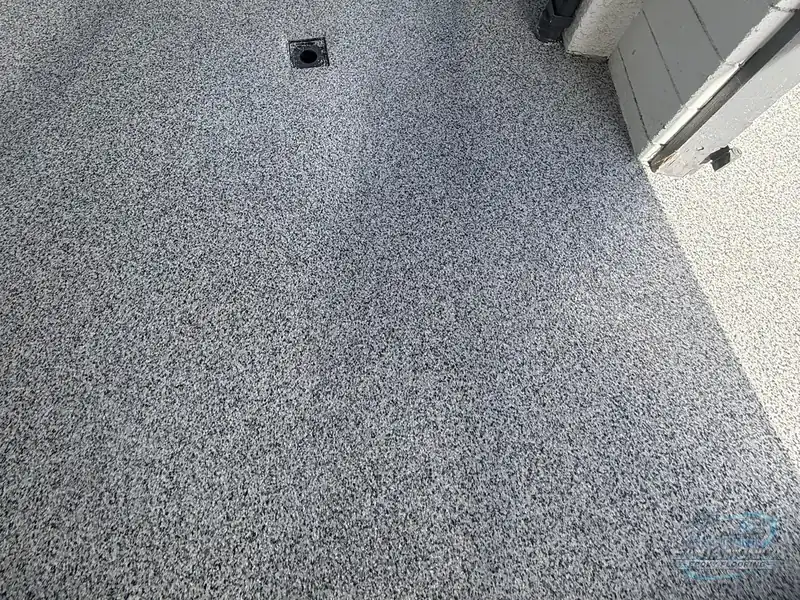
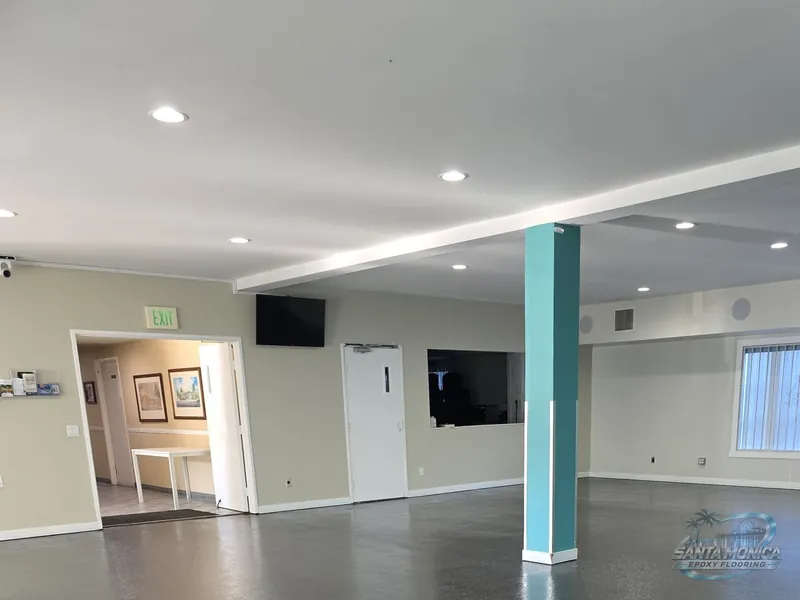
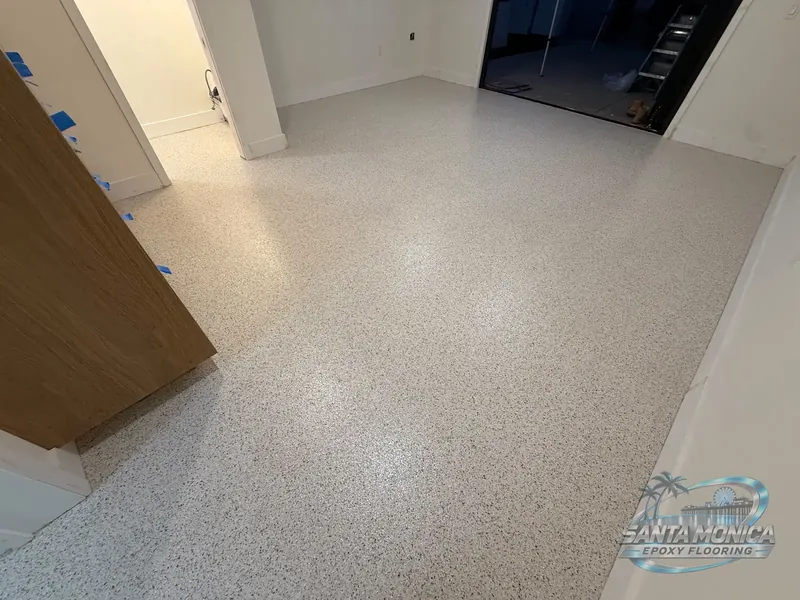
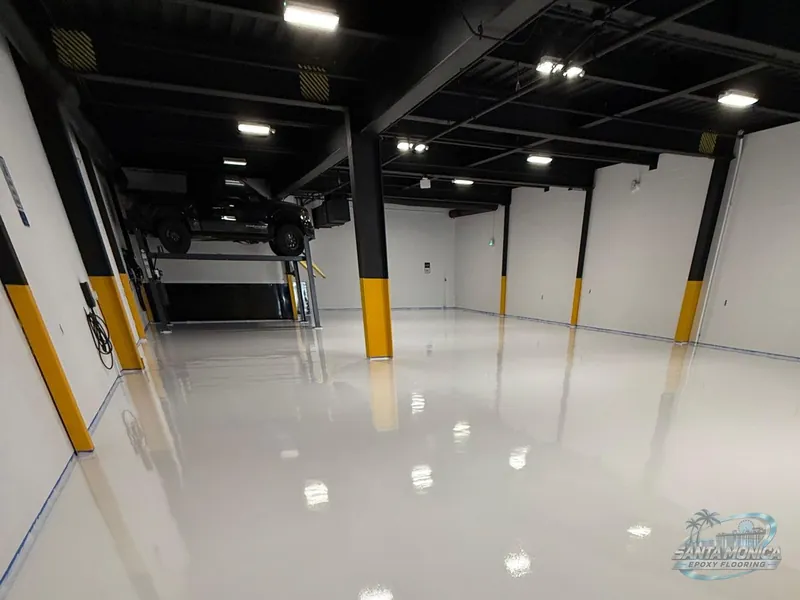
Garage floors that have gone through the process
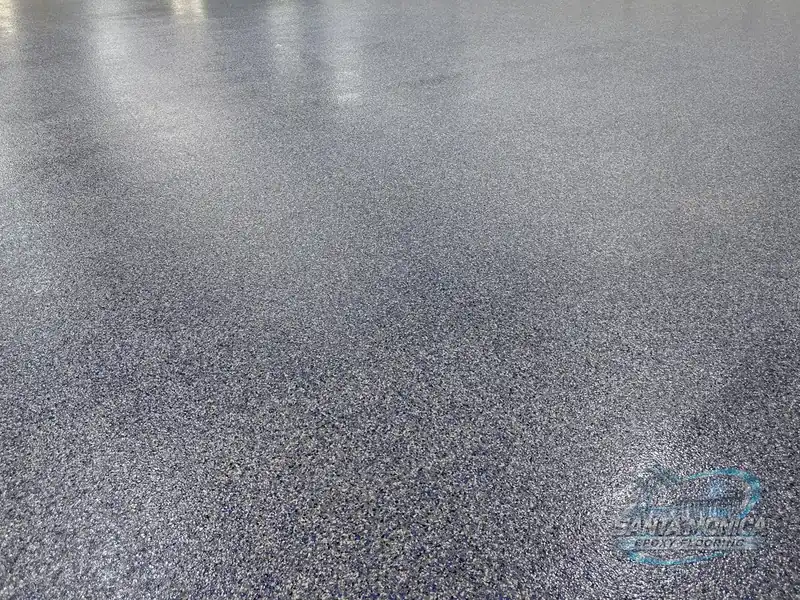
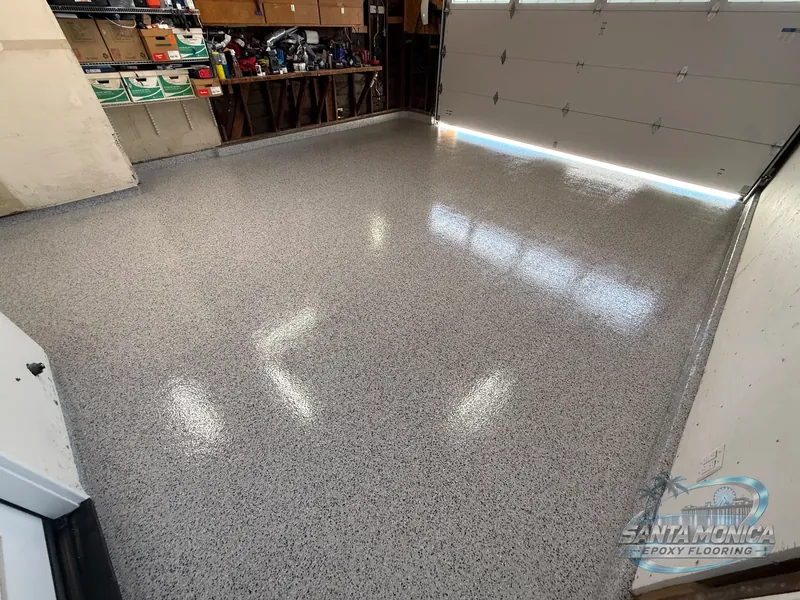
Browse real garage installs in flake and other systems, then compare them with the blends on the color chart. The full project gallery shows more.
What a Santa Monica garage floor costs by system
Epoxy garage floor prices in Santa Monica run from $2,600 for a flake garage up to $7,400 for a metallic one, with every system priced by the square foot and projects starting at $2,600.
| System | Per sq ft | Typical 2-car garage | Install time |
|---|---|---|---|
| Flake epoxy | $6.50-$10 per sq ft | $2,600-$4,000 | 1 day |
| Solid color epoxy | $9.50-$11.50 per sq ft | $3,800-$4,600 | 3 days |
| Metallic epoxy | $12.50-$18.50 per sq ft | $5,000-$7,400 | 3-4 days |
| Grind and seal | $6.50-$9 per sq ft | $2,600-$3,600 | 1-2 days |
A solid color project starts at $3,800. Read the epoxy flooring cost guide for what pushes each figure up or down, or the post on epoxy garage floor cost for a plain-language walkthrough.
How a one-day flake garage floor unfolds
The one-day schedule works because flake is a layered system built for speed without skipping steps. The crew arrives with grinders, vacuums and sealed buckets, protects the walls and door edges, and starts by grinding the whole slab to the bonding profile the coating maker requires.
Cracks are filled and ground flush, edges are coated first, and the pigmented basecoat goes down in a single pass. Chips are broadcast into the wet film by hand until nothing wet is visible, then the surface is scraped, vacuumed and sealed with a clear polyaspartic topcoat that cures fast enough to let the whole job happen in a day.
If the slab surprises us, we tell you the same day. Heavy moisture, a failed older coating or deep oil can change the build, and a damp coastal morning can push the start time. It is better to adjust the plan than to coat over a problem. The slower systems follow their own schedules, with solid color needing 3 days, metallic 3-4 days and grind and seal 1-2 days.
Handover includes the cure instructions for the exact products used on your job, so you know when to walk, when to park and when to wash. For the longer life story of these floors, the floor lifespan guide has the details.
What is the best coating for a two-car garage: flake or something else?
Most garage buyers land on flake because it is the quickest to install, the most forgiving of slab flaws and the easiest on the budget. If your concrete is rough, patched or stained, the chips hide the history in a way that smooth finishes cannot.
Solid color suits owners who want a clean, uniform look and are happy to wait for a longer schedule, and it is covered on the residential epoxy flooring page. Metallic is the statement choice: pigments swirl through the resin to create a glossy surface that no two garages share, and the metallic epoxy page shows the options and the slip caveat.
Grind and seal skips the colored layer and leaves the concrete visible under a clear coat. It is the lightest approach and works well where the slab looks good already. If you are a homeowner who also runs a shop or studio in the same building, the commercial epoxy flooring page covers heavier-duty options.
Still unsure? A short visit lets us look at the slab, show samples and recommend one build instead of four. If you are weighing a do-it-yourself kit against a professional install, our post on DIY kits versus professionals lays out the trade-offs.
Epoxy garage floor questions from Santa Monica homeowners
How long does an epoxy garage floor take to install in Santa Monica?
A flake epoxy garage floor is installed in one day for most two-car garages. Solid color needs 3 days, metallic 3-4 days and grind and seal 1-2 days. Your estimate confirms the schedule after we test the slab and measure the space.
What is the cost of garage floor coating for a two-car garage?
A two-car garage of up to 400 sq ft costs $2,600-$4,000 for flake, $3,800-$4,600 for solid color, $5,000-$7,400 for metallic and $2,600-$3,600 for grind and seal. Projects start at $2,600, and slab repairs or old coatings can move the final figure.
Is it worth it to coat a garage floor?
For most garages, yes. A sealed floor mops clean, keeps oil and tire marks from soaking into bare concrete and hides slab flaws, and flake starts at $2,600 for a typical two-car garage. A dense, clean slab that sees little use may only need a clear seal, which is what grind and seal provides.
Can you coat a garage floor with oil stains and cracks?
Usually yes. Grinding removes surface staining, cracks are filled and ground flush, and deeper oil is cleaned or ground further before the basecoat. We inspect these at the estimate and write the repair work into the price so there are no surprises later.
Is anything better than plain epoxy for a Santa Monica garage floor?
A polyaspartic topcoat over an epoxy or polyaspartic basecoat outperforms plain epoxy in sun and heat, because it is UV-stable and resists hot-tire pickup. Plain epoxy alone can amber near an open roll-up door. Most of our garage floors pair a pigmented basecoat and chips with a polyaspartic finish.
How long will an epoxy garage floor last?
Lifespan depends on slab prep, the products used and how the garage is driven on, which is why we grind, test for moisture and finish with a polyaspartic topcoat. A well-bonded floor that is cleaned gently and spared harsh solvents serves for many years of daily parking.
Is it worth coating a garage floor in a condo or apartment building?
Often yes, as long as building management approves it. Shared garages can have rules about schedules, noise and fumes, so check with your association before booking. The coating itself improves cleaning and appearance, and it protects bare concrete from drips and tire marks.
Is it safe to pressure wash my epoxy garage floor?
Usually yes, with care. Rinse with a garden hose or a low-pressure washer on a wide fan tip, keep the nozzle moving and hold it back from edges and joints. Routine care is a damp mop and mild cleaner. Harsh solvents and close, high-pressure jets are what dull the finish or lift weak edges.
What does the warranty cover on a garage floor?
The limited lifetime adhesion warranty covers adhesion of the coating to the prepared slab. The written terms come with your estimate. It does not cover damage from impact, chemicals or concrete movement, so ask us to go over the document before you sign.
What is the best type of coating for a garage floor?
For most garages the best coating is a flake epoxy system under a UV-stable polyaspartic topcoat, because it installs in one day, hides stains and handles hot tires. Metallic suits a showpiece, solid color a clean uniform look, and grind and seal a slab that already looks good.
Related pages
We also work in neighboring Westside communities, including Venice, Mar Vista and Culver City. See the full service area list, read about the crew on the about page, or book your free estimate.