1653 Stanford St #1, Santa Monica · (310) 853-8972 · Mon-Thu 8-5, Fri 8-2
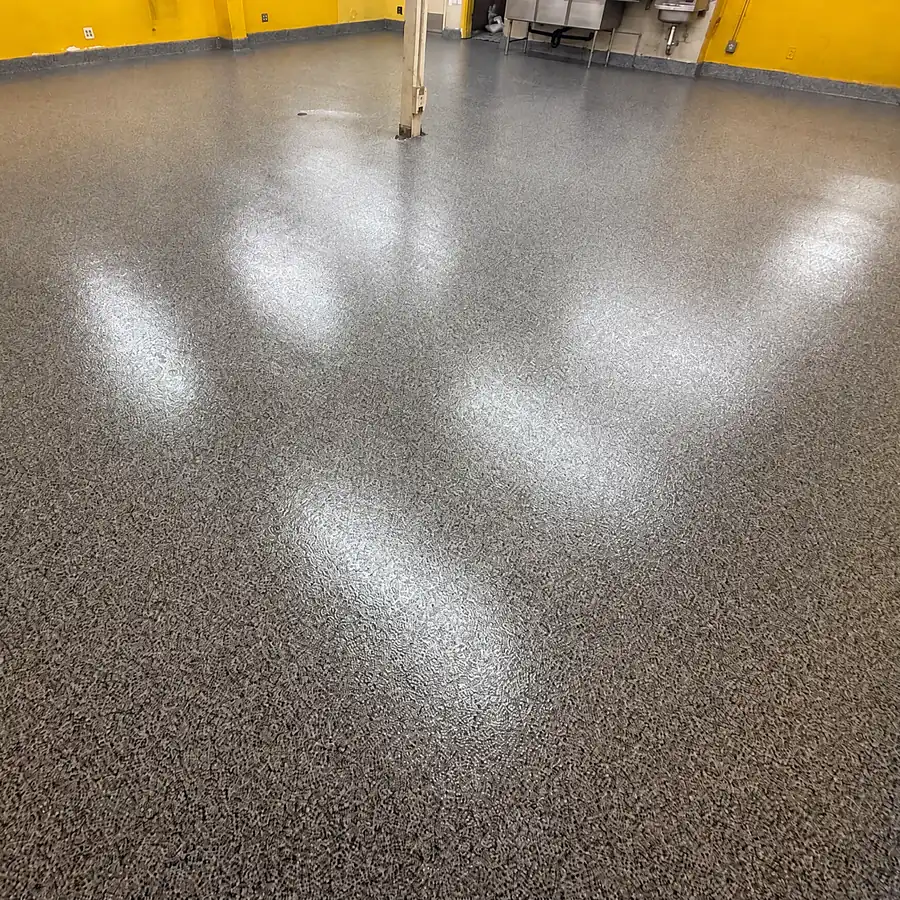
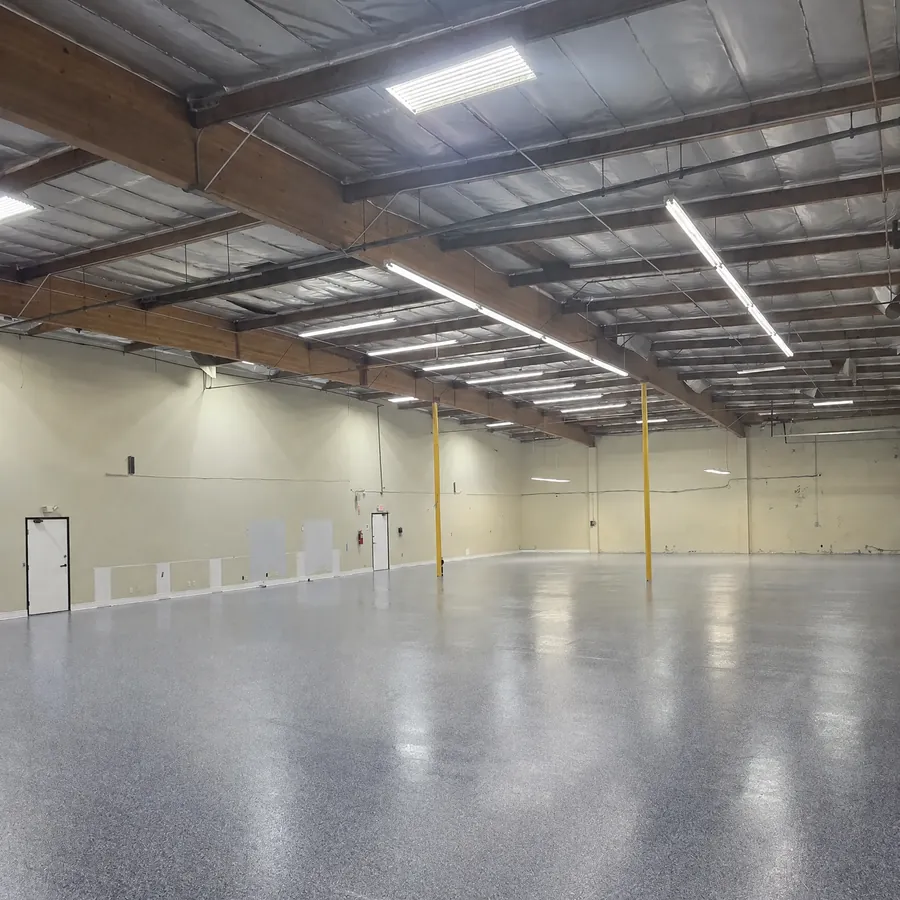
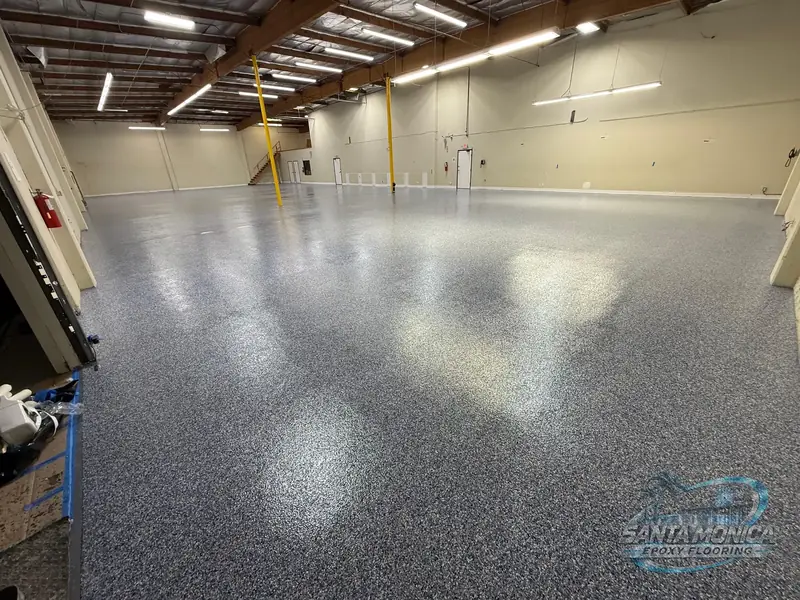
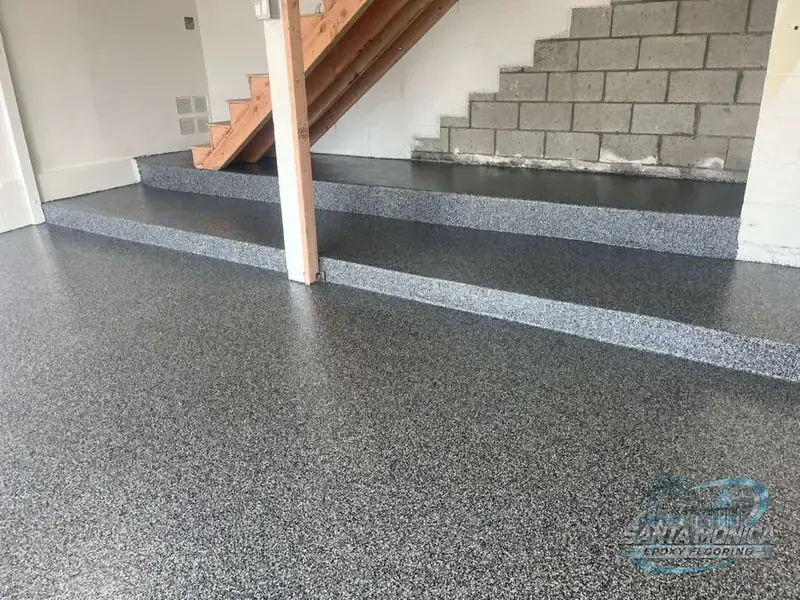
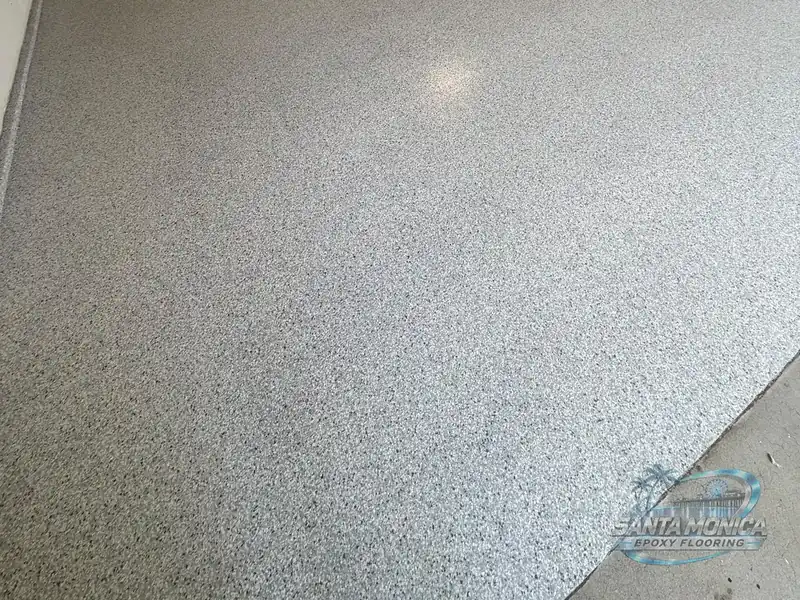
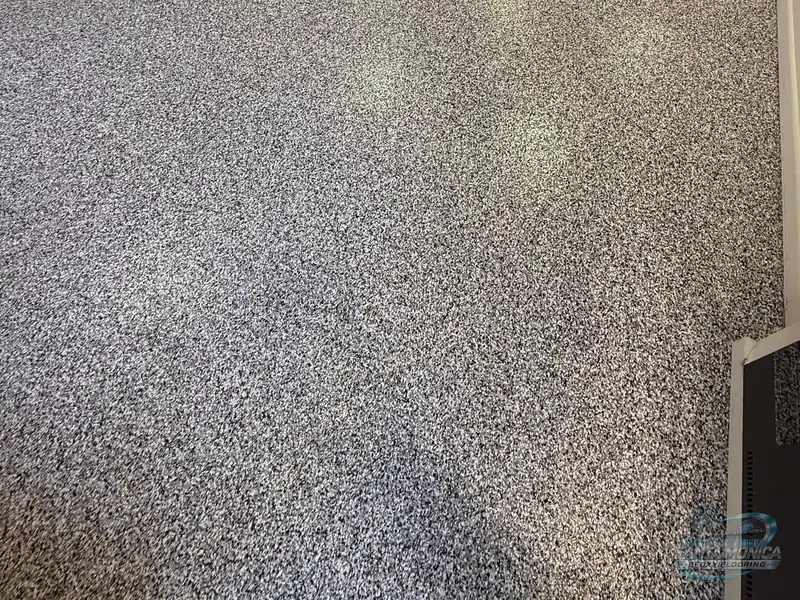
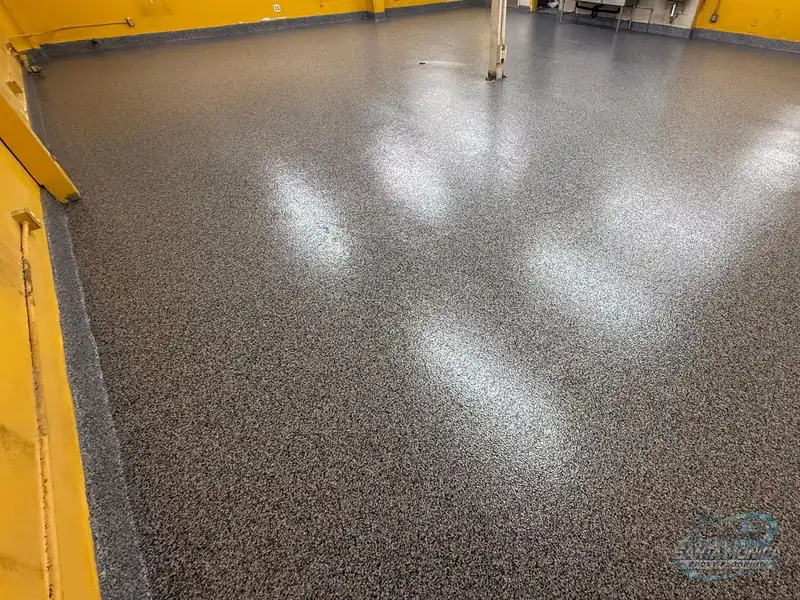
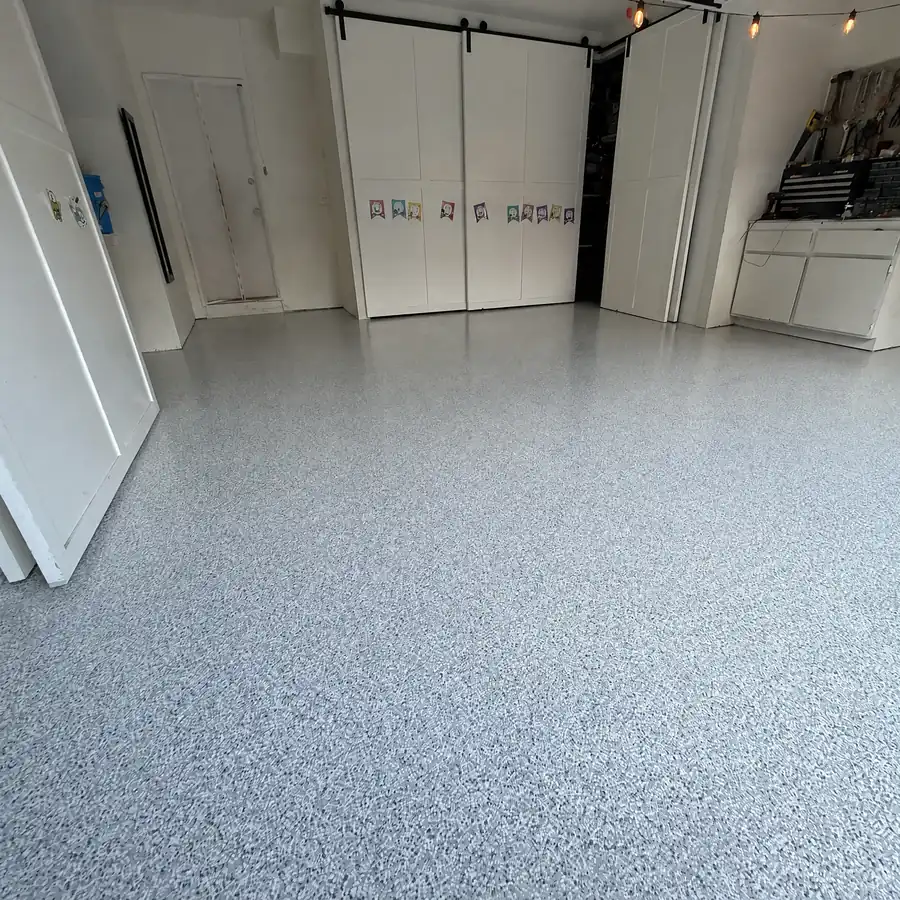
Gray flake epoxy garage floor in front of a sliding door in Downtown Santa Monica, Santa MonicaGray flake epoxy floor in a warehouse bay near Santa Monica in BrentwoodGray flake epoxy floor beside yellow safety walls in Third Street Promenade, Santa Monica
Full-broadcast flake, one-day install

Flake Epoxy Flooring in Santa Monica, CA

Colored chips thrown to full rejection over a basecoat chosen for your slab, then sealed under a UV-stable polyaspartic topcoat, all in one working day at your garage.

Limited lifetime adhesion warranty · Free on-site estimates · Shop at 1653 Stanford St #1, Santa Monica

Free On-Site Estimate

Or call (310) 853-8972

How much does flake epoxy flooring cost in Santa Monica?

Flake epoxy flooring in Santa Monica costs $6.50-$10 per sq ft, so a typical two-car garage of up to 400 sq ft runs $2,600-$4,000 and is finished in one day. Projects start at $2,600. The build you choose and the condition of your slab decide where in that range your quote lands.

Flake is the finish most Westside homeowners picture when they ask about an epoxy garage floor Santa Monica crews can install quickly. This page covers what the system is made of, the three builds, the eight install steps, what a coastal climate changes, and the honest drawbacks. For a wider comparison of every garage option, read the garage floor epoxy page.

Our shop is on Stanford Street in the Pico neighborhood, and the same crew that grinds your slab lays the chips. Hours are Monday to Thursday 8 am-5 pm and Friday 8 am-2 pm. If you want a number for your own garage rather than a range, the free estimate form is the fastest route.

What you are buying

What goes into a flake floor, layer by layer

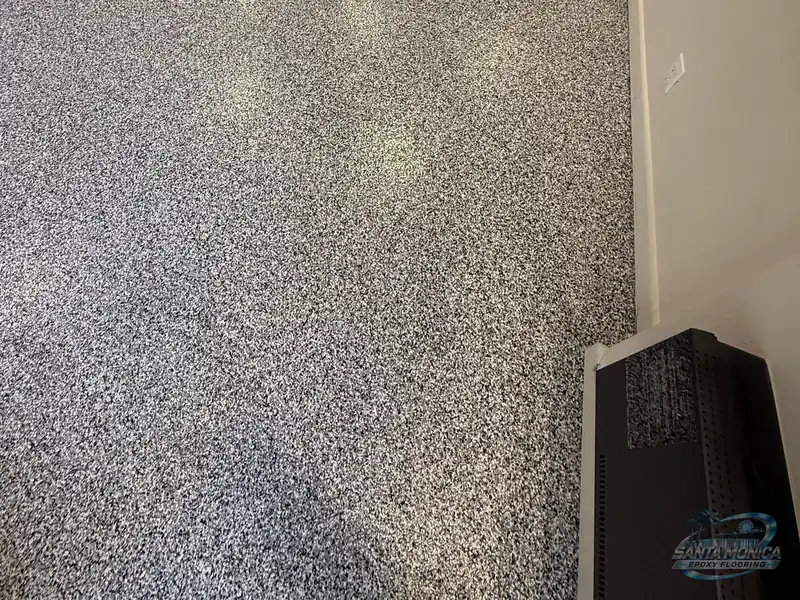
A flake floor is a stack of thin coatings on a slab that has been opened up by diamond grinding. A pigmented basecoat goes on first. While it is still wet, vinyl color chips are broadcast over it until no wet resin shows, which is what a full-rejection flake broadcast means. Once cured, the loose chips are scraped and vacuumed away, and a clear topcoat locks the rest in place.

What you end up with is a speckled, slightly textured surface. The speckle camouflages dust, tire shadows and the faint outlines of patched cracks far better than a single flat color does, and the texture gives shoes and tires something to grip when a coastal morning leaves the driveway damp. Owners who search for a durable garage floor coating or the best garage floor coating for a Santa Monica home are often really asking for this mix of looks and traction, and it is the reason flake is the first system we recommend.

The topcoat is a UV-stable polyaspartic, a fast-curing relative of polyurea that does not yellow the way a plain epoxy topcoat can when sunlight pours through an open roll-up door. If you are curious about the chemistry, the epoxy versus polyaspartic breakdown explains it without jargon, and the polyaspartic floor coatings page shows where else we use it.

Charcoal flake epoxy floor with a high-gloss topcoat near Santa Monica in Venice

Three flake builds: 3, 4 or 5 layers

Every build starts with diamond grinding and ends with a polyaspartic topcoat. The difference is how many coats sit in between and what each one is asked to do, so pick by how hard the garage works and what your slab tells us at the estimate.

3-layer: standard system

From $6.50 per sq ft
Typical two-car garage: From $2,600

Low end of the range

  • Pigmented basecoat matched to your slab: moisture-vapor-barrier (MVB) epoxy where the concrete needs moisture protection, or pigmented polyaspartic where UV exposure matters more
  • Flake broadcast to full rejection for a dense, even texture
  • UV-stable, hot-tire-safe polyaspartic topcoat

Best for: Most everyday garages; installed in one day, walkable that evening.

4-layer: double-topcoat flake system

$6.50-$10 per sq ft, mid-range
Typical two-car garage: Between $2,600 and $4,000

Middle of the range

  • Everything in the 3-layer build, including the slab-matched basecoat
  • A second topcoat: urethane for gloss or polyaspartic for a matte look
  • Optional sanding between coats for a smoother feel underfoot
  • Optional slip-resistant grit: 240 (fine), 80, or 30 (most grip)

Best for: Owners who want a smoother surface, a specific sheen, or extra grip.

5-layer: maximum-build flake system

Up to $10 per sq ft
Typical two-car garage: Up to $4,000

Top of the range

  • A dedicated clear moisture vapor barrier as its own first layer
  • Pigmented polyaspartic basecoat
  • Flake broadcast to full rejection
  • Polyaspartic topcoat
  • Final coat of urethane gloss or matte polyaspartic, with optional sanding and aluminum-oxide grit (240 / 80 / 30)

Best for: Slabs with moisture concerns and owners who want the thickest, most protected build.

Install day

Eight steps from bare concrete to finished floor

This is the flake sequence only. Metallic, solid color and quartz jobs follow their own schedules, which you can read about on their pages.

  1. Grind Diamond grinding removes the weak top skin and leaves the bonding profile the coating maker specifies. We grind instead of acid-etching.
  2. Vacuum A HEPA vacuum clears grinding dust from the pores, because loose dust left in the slab turns into a weak layer under the resin.
  3. Fill Cracks, divots and spalls are filled and ground flush so none of them telegraphs through the chips.
  4. Edge in Wall bases and any step down to the house are coated first so the finish wraps cleanly up the vertical surface.
  5. Basecoat The pigmented basecoat is rolled out in a thick, even film, using whichever chemistry the slab calls for.
  6. Broadcast Chips are thrown by hand into the wet basecoat in overlapping passes until the surface is fully covered.
  7. Scrape Once the base has set, excess chips are scraped up, the floor is vacuumed again and the surface is checked by eye and by hand.
  8. Seal Clear polyaspartic is applied over the chips, sometimes in two coats, and the garage is handed back with clear instructions on cure and care.
Matching base to slab

Why the basecoat depends on the concrete under it

Two garages with identical flake can have different basecoats under them. When a slab needs moisture protection, we use a pigmented moisture-barrier epoxy basecoat. When moisture is not the concern and UV exposure is, such as a garage that opens to afternoon sun or a light-colored chip blend, we use a pigmented polyaspartic basecoat instead.

We make that call after testing the slab with calcium chloride or an in-slab RH probe, and the coating maker's limits for each product decide the build, not a rule of thumb. A skipped moisture test is one of the usual reasons coatings blister later, a failure mode we cover in the post on why epoxy garage floors peel.

The price range for flake reflects this. A clean, bare, sound slab with a 3-layer build sits near the low end of $6.50-$10 per sq ft. A garage that needs old paint stripped, glue removed, wide cracks opened and filled, or a clear moisture-barrier first layer moves toward the top. Your estimate lists each item so you can see what you are paying for.

  • Peeling paint or a failed older coating that has to come off
  • Mat adhesive or carpet glue stuck to the concrete
  • Wide or branching cracks and spalled edges
  • Oil that has soaked deep into the pores
  • A slab that tests high for moisture and needs the 5-layer build
Installed price

What flake epoxy costs for a Santa Monica garage

Flake epoxy flooring in Santa Monica runs $6.50-$10 per sq ft installed, and a typical two-car garage up to 400 sq ft lands between $2,600 and $4,000 with a one-day install. Projects start at $2,600.

Installed prices, 2026. Typical two-car garage = up to 400 sq ft. Projects start at $2,600. Commercial and industrial floors are quoted after a free site visit. Prices and details reviewed November 2026.
SystemPer sq ftTypical 2-car garageInstall time
Flake epoxy$6.50-$10 per sq ft$2,600-$4,0001 day

Other finishes have their own price lines on the epoxy flooring cost guide. For a smooth color without chips see solid color and residential floors, and for swirled, glossy surfaces see metallic epoxy.

Coastal conditions

What a marine-layer climate changes about a flake job

Santa Monica is mild. Average highs run from the low 60s in winter to about 71 F in September, lows stay between 50 and 63 F, and the city gets roughly 13 inches of rain a year, nearly all of it between late fall and early spring. That is comfortable weather for coatings, which are normally applied between about 50 and 85 F.

The real scheduling issue is not cold, it is moisture in the air. On a gray, damp morning the slab can sit close to the dew point, and a coating laid on a surface that cool traps moisture and can leave pinholes or a cloudy film. Coating makers require the slab to stay a few degrees above dew point while the product goes down, so we check the surface and the air before we open the first bucket.

In practice that means a coastal job sometimes starts a little later in the morning, or we move it a day when conditions say wait. It is a short delay that protects a floor meant to last, and it is one reason we schedule installs on a calendar with some room in it.

Finished floors

Flake floors from the gallery

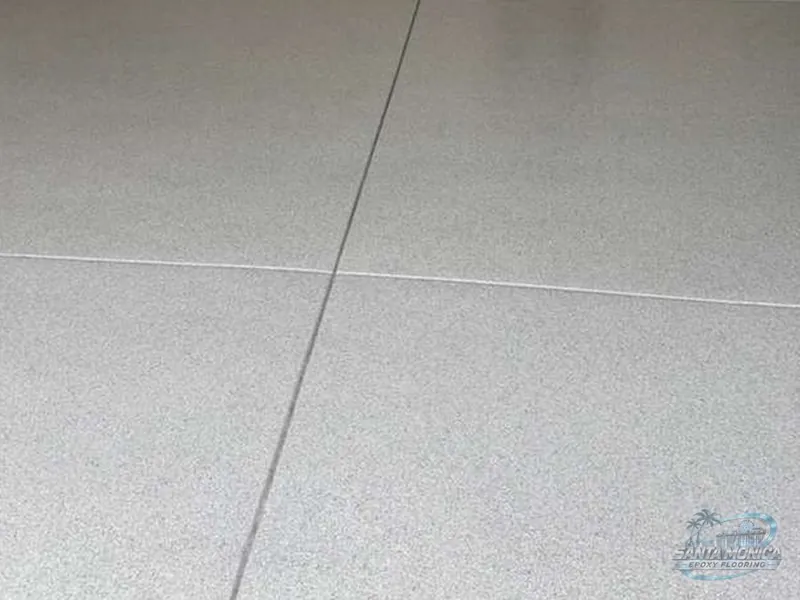
These are real garage floors in the build styles described above, so you can compare chip density, color blend and sheen before you choose. The color chart has the full set of blends.

See the Full Gallery

Straight answers

What is the downside of flake epoxy flooring, and how do we handle it?

No garage floor is maintenance-free, and flake has trade-offs worth hearing before you sign. The textured surface holds a little more dirt than a smooth one, so it takes a stiffer broom and the occasional scrub with a deck brush. Heavy gouges from dropped steel can chip a topcoat, and a small repair, while possible, is visible if the chip blend is unusual.

Hot-tire pickup is the issue buyers ask about most. A polyaspartic topcoat resists it well, but some vehicle fluids and a few high-performance tires can still leave marks, and no coating is stain-proof. We would rather say that plainly than promise it away.

The coating also comes with a limited lifetime adhesion warranty. The promise is about adhesion, meaning the bond between the flake system and the slab we prepared. The wording is printed in the paperwork that accompanies your flake quote, and gouges from dropped tools, chemical spills or a slab that shifts are not part of it. Read it before you book, and ask about anything unclear.

If your garage is a workspace rather than a parking space, the commercial epoxy flooring page and the industrial epoxy page cover heavier builds. Homeowners weighing the long game can read how long an epoxy garage floor lasts in our floor lifespan guide.

Flake questions

Flake epoxy questions we hear from Santa Monica garages

How long does a flake epoxy garage floor take to install in Santa Monica?

A flake floor is installed in one day for a typical garage. Grinding, filling, basecoat, chip broadcast and topcoat all happen in that visit, with a short clean-up pass afterward. Very large garages, heavy repairs or damp weather can push the schedule, and your estimate states the plan.

How much does it cost to epoxy a 400 sq ft garage floor with flakes?

A flake epoxy floor for a garage of up to 400 sq ft costs $2,600-$4,000 in Santa Monica, based on $6.50-$10 per sq ft. Projects start at $2,600. Layer count, old paint or glue and crack repair move the quote inside that range, and every item appears on the written estimate.

What is the difference between 3, 4 and 5 layer flake builds?

The 3-layer build is basecoat, chips and a polyaspartic topcoat. The 4-layer adds a second topcoat for extra gloss and wear, with optional sanding and a slip additive. The 5-layer starts with a clear moisture-barrier epoxy, which suits slabs that test high for moisture.

Is flake epoxy slippery when wet?

Flake is more textured than a smooth coating, so it grips better than plain epoxy. If you want more traction, we can add an aluminum-oxide additive in 240, 80 or 30 grit to the final topcoat. A coarser grit grips more but is harder to sweep clean.

Can you coat an oil-stained garage floor?

Yes, in most cases. Light stains are removed by grinding. Oil that has soaked deep into the pores is cleaned or ground further before coating, because oil left in the slab can weaken the bond. We check this at the estimate and price any extra prep clearly.

Does coastal humidity affect curing?

It can. On damp mornings the slab may sit near the dew point, and coating on a surface that cool risks pinholes or a cloudy finish. We check surface temperature and air conditions before starting, and we adjust the start time or move the day when the numbers say wait.

Will hot tires peel a flake epoxy floor?

A polyaspartic topcoat is chosen to resist hot-tire pickup, and properly prepared floors handle daily parking well. No coating is immune to every fluid or tire compound, though. Wipe spills promptly and use the cleaning guidance we leave with you after the install.

What does a flake epoxy floor look like after five years?

A flake floor keeps its speckled look because the chips sit under the clear topcoat, and a UV-stable polyaspartic topcoat does not yellow in sun. Expect light scuffs where tires turn and tools drop, and some dulling of the gloss in the busiest spots. Slab prep and daily use decide how it ages.

Can moisture or mold get trapped under a flake epoxy floor?

It can if a damp slab is coated without testing it. We test the concrete with calcium chloride or an in-slab RH probe first, and the coating maker's limits decide whether the build needs a moisture-barrier epoxy basecoat. A tested, properly prepared slab is the best protection against blisters and trapped moisture.

What is the best color for a flake garage floor?

A multi-color blend in a mid tone is the safest pick, because mixed chips hide dust, tire shadows and small scratches better than one dark or light color. Lighter blends brighten a dim garage, while darker ones show dust more. The color chart lists our blends, and we bring samples to the estimate.

Keep reading

Planning a bigger project? See the Santa Monica epoxy flooring home page, compare finishes in the flake versus metallic versus solid guide, learn about the crew on the about page, or look at nearby coverage such as Venice, Mar Vista and Brentwood. When you are ready, book your free estimate.

Book your free flake floor estimate

We measure the garage, test the slab and show chip samples at your Santa Monica home. Call (310) 853-8972 or send the form to start.